

Business Cash Flow Management: The Complete UK Guide for 2026
Most small businesses that fail aren’t unprofitable. They run out of cash. That distinction matters more than almost anything else you’ll learn about running a company, and it’s the reason business cash flow management deserves real attention rather than a quick glance at your bank balance once a month.
Research from the Chartered Institute of Credit Management found that 82% of UK SMEs have faced cash flow difficulties, and separate figures from Equifax suggest roughly 50,000 SMEs close each year largely because of cash flow problems. If you run a business in the UK, this isn’t an abstract risk. It’s a live one, and it’s manageable once you understand how it actually works.
This guide walks through what business cash flow management means, why it matters, how to build a forecast that works, and the practical steps that keep money moving in the right direction.
What Is Business Cash Flow Management?
Business cash flow management is the process of tracking, forecasting, and controlling the money moving into and out of your business so you always have enough cash on hand to meet your obligations.
That’s the short answer. Here’s what it means in practice.
Cash Flow Management in Plain English
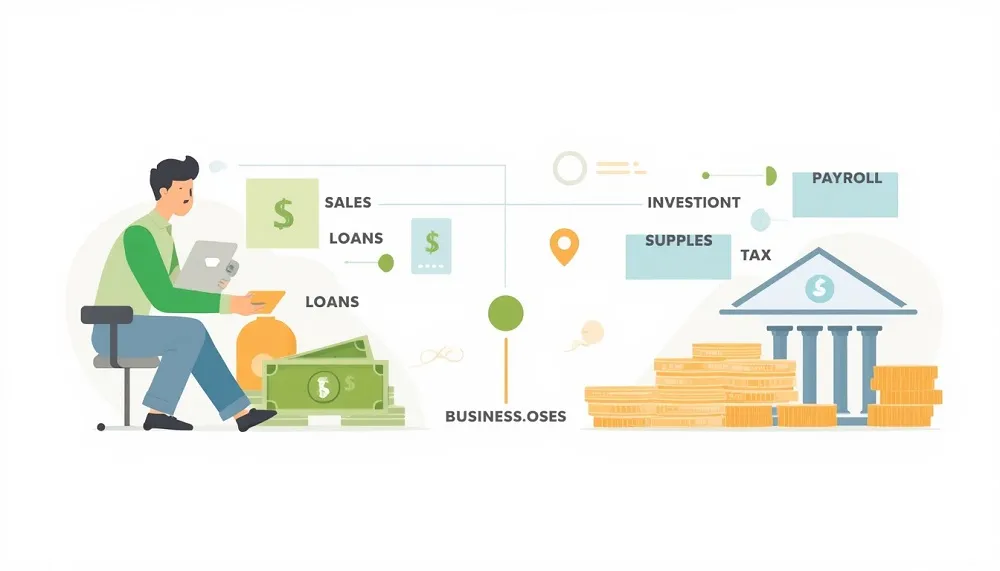
Every business has two kinds of money movement: cash coming in (sales, loans, investment) and cash going out (wages, rent, stock, tax, suppliers). Cash flow management is simply the discipline of watching both sides closely enough that you’re never caught short.
It covers three connected activities. Monitoring means keeping accurate, up-to-date records of every payment in and out. Forecasting means projecting what’s coming next, so you can see problems before they arrive rather than after. Controlling means actively making decisions, such as chasing an overdue invoice or delaying a non-essential purchase, that keep your cash position healthy.
Cash Flow vs Profit: Why They’re Not the Same Thing
This is the single most common misunderstanding among new business owners, and it’s worth getting right early.
Profit is what’s left after you subtract your expenses from your revenue over a period, on paper. Cash flow is what’s actually sitting in your bank account right now. A business can be profitable and still run out of cash, because profit includes sales you haven’t been paid for yet, while cash flow only counts money that’s actually landed.
Picture a small manufacturer that lands a large order, delivers the goods, and books the sale as profit. If the customer pays on 60-day terms, that profit sits on paper for two months while wages, rent, and supplier bills still need paying this week. The business is profitable and cash-poor at the same time. This gap between “made the sale” and “got the money” is where most small business cash flow trouble starts.
Why Cash Flow Management Matters for UK Small Businesses
Cash flow isn’t just an accounting exercise. It determines whether you can pay your staff on Friday, whether HMRC gets its VAT and PAYE payments on time, and whether you can say yes to a growth opportunity when it appears.
The Scale of the Problem in 2026
The numbers tell a clear story about why this topic keeps coming up in searches. UK small businesses are currently owed in the region of £26 billion in unpaid invoices, and analysis of Q1 2026 data found 17.48 million overdue invoices sitting on UK company books, a rise on the same period the year before. Late payments themselves are estimated to cost UK businesses around £2 billion a year once you factor in the knock-on effects.
The pattern shows up again and again with UK small businesses: a profitable client whose own customers pay 60 to 90 days late, while suppliers, HMRC, and payroll all expect payment on the dot. That squeeze, not a lack of sales, is what pushes many otherwise healthy businesses towards insolvency. Research from the Federation of Small Businesses has repeatedly named poor cash flow and late payments among the leading causes of UK SME failure, which is exactly why this deserves a proper system rather than guesswork.
The Three Types of Business Cash Flow
A full cash flow picture has three parts. Most business owners only think about the first, which is a mistake because all three affect your overall cash position.
Operating Cash Flow
This is cash generated from your core, day-to-day business activities: sales coming in, wages and rent going out, stock purchases, and supplier payments. It’s usually the most important figure because it shows whether your business actually sustains itself through normal trading, without relying on loans or asset sales to stay afloat.
Investing Cash Flow
This covers money spent on, or generated from, longer-term assets such as equipment, property, or vehicles. Buying a new van reduces your investing cash flow this month, even though it might improve your operating cash flow for years afterwards.
Financing Cash Flow
This tracks cash tied to how you fund the business itself: taking out a loan, drawing on a line of credit, or an owner injecting personal capital. It tells you how much of your cash position depends on borrowing rather than trading.
Looking at all three together gives you a genuinely complete view. A business with weak operating cash flow but strong financing cash flow might look healthy on the bank statement while quietly building a debt problem.
How to Read a Cash Flow Statement (With a Worked Example)
A cash flow statement is simply a record of cash in and cash out over a set period, usually a month. Here’s a simplified example for a small design agency in a typical month.
| Item | Amount |
|---|---|
| Opening cash balance | £8,200 |
| Client invoices paid this month | £14,500 |
| Total cash in | £14,500 |
| Salaries | £9,000 |
| Rent | £1,200 |
| Software subscriptions | £350 |
| Supplier payments | £2,100 |
| VAT payment | £1,800 |
| Total cash out | £14,450 |
| Closing cash balance | £8,250 |
Notice this business barely moved its cash position, despite having a reasonably healthy month of sales. If a large client had paid 30 days late, the closing balance would have dropped well into negative territory, even though the business was, on paper, doing fine. That’s the entire reason a statement like this is worth building every month rather than trusting memory or a rough guess.
What Causes Cash Flow Problems in Small Businesses?
Most cash flow trouble traces back to a handful of recurring causes.
Late payments from customers are the biggest single factor for UK SMEs, with well over half of invoices reportedly settled after their due date. Slow or inconsistent invoicing compounds the problem, since every day you delay sending an invoice is a day added to how long you’ll wait for payment.
Overstocking ties up cash in goods sitting on a shelf rather than in your bank account. Underpricing or thin margins mean you need a higher sales volume just to cover the same fixed costs. Rapid, uncontrolled growth is a less obvious cause: taking on more staff, stock, or premises ahead of the cash needed to fund them can strain even a genuinely successful business. Finally, a lack of forecasting means problems are only spotted once they’ve already arrived, when your options for fixing them are far more limited.
How to Build a Cash Flow Forecast Step by Step
A forecast is your early warning system. Building one doesn’t require an accounting degree, just a consistent method.
- List every expected cash inflow for the period ahead: confirmed sales, invoices due, any financing you expect to draw down.
- List every expected cash outflow: wages, rent, supplier payments, loan repayments, tax due (VAT, PAYE, Corporation Tax).
- Start with your actual current bank balance, then add expected inflows and subtract expected outflows week by week.
- Flag any week where the running total dips below zero, or below whatever minimum buffer you’ve set.
- Update the forecast weekly using real figures, not just projections, so it stays accurate.
Why a 13-Week Rolling Forecast Works Best
A 13-week window is long enough to see problems coming with time to act, but short enough that the numbers stay realistic rather than speculative. Each week you drop the oldest week and add a new one, so you’re always looking three months ahead. This is the method most UK finance professionals now recommend over a single annual forecast, precisely because it catches short-term gaps that an annual view smooths over and hides.
Best Case, Most Likely, Worst Case
Run three versions of your forecast side by side. Best case assumes everyone pays on time. Most likely reflects your actual historical payment patterns. Worst case assumes your largest customers pay 30 days later than usual. The gap between most likely and worst case tells you exactly how large a cash buffer you need to hold.
Cash Flow Management Templates: What to Include
If you’re searching for a cash flow management template or a PDF version to work from, look for one that includes these sections at minimum: opening balance, a full list of expected inflows by source, a full list of expected outflows by category (payroll, rent, stock, tax, loan repayments), a weekly or monthly closing balance, and a simple flag or highlight for any period where the balance drops below your target buffer.
A spreadsheet works perfectly well for this if you’re just starting out. Software becomes worth the cost once manual updates start eating significant time each week, which is usually somewhere around the ten to fifteen employee mark for most businesses.
Practical Strategies to Improve Business Cash Flow
Speed Up Money Coming In
Invoice the moment work is delivered rather than waiting for a monthly batch. Shorten your payment terms where you reasonably can, since moving from 30 days to 14 days materially speeds up your cash cycle. Offer a small early payment discount for customers who settle quickly, and make paying as easy as possible with clear due dates and multiple payment methods.
Slow Down (Carefully) Money Going Out
Negotiate longer payment terms with your own suppliers where the relationship allows it, without damaging trust built over time. Review recurring costs, such as software subscriptions, quarterly and cancel anything you’re not using. Where it makes sense, shift fixed costs to variable ones: freelancers instead of permanent hires for fluctuating workload, or usage-based software instead of a fixed annual licence.
Keep a Cash Reserve
A common benchmark is three months of operating expenses held in accessible cash, though seasonal businesses or those with a concentrated customer base should aim higher. Even a modest reserve, built gradually, gives you breathing room during a slow month rather than a crisis.
Financing Options When Cash Is Tight
Sometimes good management alone isn’t enough to bridge a gap, and that’s when financing tools earn their keep. A business line of credit suits short-term needs like covering payroll during a seasonal dip, since you only pay interest on what you draw down. Invoice finance, including factoring and discounting, releases cash tied up in unpaid invoices rather than waiting the full payment term. A term loan suits a planned, larger expense with a clear repayment schedule. If you’re weighing up start-up or growth funding more broadly, our guide to start up loans in the UK covers rates and eligibility in detail.
Cash Flow Management Software and Tools
Cloud accounting platforms such as Xero, QuickBooks, Sage, and FreeAgent now build cash flow forecasting directly into their core packages, automatically pulling in real invoices and bills rather than relying on manual entry. If you’re already using digital records for Making Tax Digital compliance, the same underlying data can usually feed a forecast at no extra cost, which is worth checking before paying for a separate tool. For a wider look at compliant record-keeping, see our Making Tax Digital guide.
If managing this alongside everything else feels like too much, outsourcing the day-to-day tracking is a realistic option. Our guide to bookkeeping services in the UK breaks down typical prices and what’s included.
The 2026 Late Payment Law Changes UK Businesses Should Know
The UK government announced new measures in March 2026 aimed at tackling late payments, described at the time as the toughest crackdown in over 25 years. Three changes matter most for small businesses. Large firms will face a 60-day cap on payment terms when paying smaller suppliers. Statutory interest, currently available but optional under the Late Payment of Commercial Debts (Interest) Act 1998, will become mandatory on late commercial payments rather than something you have to actively invoke. The Small Business Commissioner is also gaining stronger powers to investigate poor payment practices and fine persistent offenders.
Worth noting: the right to charge statutory interest at 8% above the Bank of England base rate, plus a fixed compensation amount per invoice, already exists today under the 1998 Act. Many small businesses simply don’t use it. It’s worth building into your standard terms now rather than waiting for the mandatory changes to land.
The Benefits of Getting Cash Flow Management Right
Beyond simply avoiding a crisis, strong cash flow management gives you real strategic advantages. It builds creditworthiness, since lenders and investors look closely at cash discipline, not just profit, when assessing risk. It creates negotiating power with suppliers, since businesses known for paying reliably often secure better terms. It provides genuine breathing room during seasonal dips or unexpected setbacks. Perhaps most importantly, it lets you say yes to growth opportunities, like a bulk stock discount or a sudden large order, without panicking about how to fund them.
Learning Cash Flow Management: Courses and Resources
If you want structured learning rather than picking things up as you go, a few solid free starting points exist. The Open University’s OpenLearn platform offers free introductory finance and cash flow modules aimed at small business owners. Enterprise Nation and your local Growth Hub often run free or low-cost workshops covering cash flow basics for UK SMEs. Accounting software providers such as Xero and Sage also publish free guides and short courses aimed specifically at small business owners rather than accountants, which tend to be the most practical starting point if you’re new to the topic. For anyone studying the subject formally, treat this guide as a working set of notes: the core concepts (the three cash flow types, forecasting, and the cash-versus-profit distinction) are the same ones covered in most introductory business finance courses.
Cash Flow Management Checklist
Use this as a quick monthly review:
- Cash flow statement updated with actual figures
- 13-week forecast rolled forward and reviewed
- Overdue invoices chased this week
- Upcoming tax payments (VAT, PAYE, Corporation Tax) accounted for
- Cash reserve at or above your target buffer
- Recurring subscriptions and costs reviewed this quarter
- Payment terms with key suppliers and customers still working in your favour
Frequently Asked Questions
What is the significance of a favourable balance in cash flow management?
A favourable, or positive, cash flow balance means more cash came into the business than went out over the period measured. It signals that the business can meet its short-term obligations without relying on borrowing, and it typically indicates stronger financial stability to lenders, suppliers, and investors reviewing your accounts.
Which professionals help small businesses with bookkeeping and cash flow?
Bookkeepers handle the day-to-day recording of transactions and typically maintain the underlying records a cash flow forecast is built from. Management accountants and chartered accountants go further, building forecasts, reviewing working capital, and advising on strategy. Many UK small businesses use a combination: a bookkeeper for weekly record-keeping and an accountant for periodic strategic review.
What are the leading business banking solutions with cash flow features?
Most major UK business bank accounts now integrate with cloud accounting software, but the strongest cash flow features tend to sit in the accounting platforms themselves (Xero, QuickBooks, Sage, FreeAgent) rather than the bank account. When comparing options, look for real-time transaction feeds, built-in forecasting tools, and automated invoice reminders, since these are the features that actually reduce manual cash flow work day to day.
How can a business improve its cash flow management?
Start with visibility: build a simple 13-week forecast and update it weekly with real numbers. Then work both sides of the equation, speeding up invoicing and payment collection while carefully managing what you pay out and when. Keep a cash reserve, and use financing tools like a line of credit deliberately, not just as a last resort during a crisis.
What are the risks of poor cash flow management?
The most immediate risk is being unable to pay staff, suppliers, or HMRC on time, which can damage relationships and trigger penalties or interest charges. Left unaddressed, persistent cash flow problems can lead to lost growth opportunities, damaged supplier trust, and ultimately insolvency, even for a business that’s profitable on paper. Poor cash flow is consistently cited by the Federation of Small Businesses as one of the leading causes of UK SME failure.