

How to Start a Bookkeeping Business in the UK
Bookkeeping is one of the few service businesses you can genuinely start from a kitchen table with minimal upfront cost, and demand is not slowing down. With Making Tax Digital pulling millions more UK businesses into mandatory digital record-keeping over the next few years, the need for people who can keep books accurately and on time continues to grow. This guide walks through what it actually takes to start a bookkeeping business in the UK, from qualifications and legal requirements to pricing your first clients.
Do You Need Qualifications to Become a Bookkeeper?
No. There is no legal requirement to hold a specific qualification before offering bookkeeping services in the UK. In practice, though, most successful self-employed bookkeepers complete a recognised course before taking on clients, both to build genuine competence and because clients increasingly ask about credentials before handing over their finances.
AAT, ICB and IAB Explained
Three professional bodies dominate UK bookkeeping training. The Association of Accounting Technicians (AAT) offers a broad pathway that can lead into wider accountancy careers, structured across Levels 1 to 4, with Level 3 qualifying you as an AAT Bookkeeping Member (AATQB). The Institute of Certified Bookkeepers (ICB) focuses specifically on practical bookkeeping skills and is popular among people planning to run their own practice from the start. The International Association of Bookkeepers (IAB) offers a similar route with international recognition.
Most people complete Level 1 or 2 before starting out, then continue studying towards a practice licence as their client base grows. Courses typically take two to twelve months depending on the level and study pace, and can usually be completed part-time alongside existing work.
How Much Does It Cost to Start a Bookkeeping Business?
Starting costs are genuinely low compared to most service businesses. A realistic first-year budget looks something like this:
| Cost item | Typical range |
|---|---|
| Bookkeeping qualification (Level 1 to 3) | £300 to £1,500 |
| AML supervision registration | £300 application fee, plus annual fee |
| Professional indemnity insurance | £150 to £400 a year |
| Bookkeeping software subscription | £15 to £60 a month |
| Website and basic marketing | £100 to £500 |
| Laptop and equipment, if needed | £400 to £1,000 |
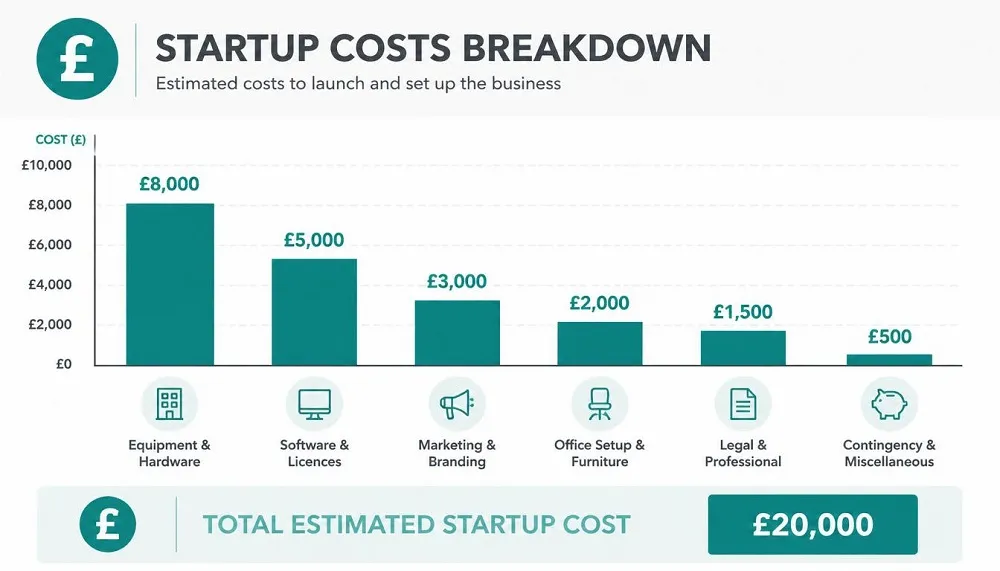
Altogether, most people can launch a self-employed bookkeeping practice for somewhere between £1,000 and £3,500, far less than most other professional service businesses require to get off the ground. If you would rather buy into a proven system than build one from scratch, a bookkeeping franchise sits at a considerably higher entry point, covered further down.
Registering Your Bookkeeping Business
Sole Trader vs Limited Company
Most bookkeepers start as sole traders because the setup is simple: register with HMRC, file a Self Assessment return each year, and keep records of your own income and expenses. A limited company adds tax planning flexibility and separates your personal liability from the business, but brings additional filing obligations, including a Company Tax Return and Companies House accounts. Many bookkeepers begin as sole traders and incorporate later once income and client numbers justify the extra administration. If you decide incorporation makes sense from the start, our guide to registering a business with Companies House covers the full process.
Anti-Money Laundering (AML) Supervision: A Legal Requirement
This is not optional, even for a solo operator with one client. Under the Money Laundering, Terrorist Financing and Transfer of Funds Regulations 2017, anyone providing bookkeeping services in the UK must register for AML supervision before taking on clients, because bookkeeping is considered a higher-risk activity for money laundering. You can register directly with HMRC, which costs £300 to apply plus an annual premises fee of £400, or through your professional body, AAT, ICB, or IAB, if you hold membership, which often simplifies the process considerably. AML supervision is not a one-off box to tick either; it requires ongoing client due diligence checks, record-keeping, and periodic training to stay compliant.
Insurance You Need Before Taking Clients
Professional indemnity insurance protects you if a client claims that an error in your work caused them financial loss, and most professional bodies require it if you hold a practice licence. It is worth treating this as non-negotiable rather than optional, given how directly your work feeds into a client’s tax filings. Depending on how you work, public liability insurance, if clients visit your premises, and cyber liability insurance, given the volume of sensitive financial data you will handle, are also worth considering from the outset.
Choosing Your Bookkeeping Software and Tools
Comfort with cloud accounting software is essential, since almost every client will expect you to work in Xero, QuickBooks, Sage, or FreeAgent. Most of these platforms offer a practice or partner tier for bookkeepers managing multiple clients, often at a discount to standard pricing, and getting certified within a platform’s own partner programme can also become a useful credential when pitching to new clients.
How to Price Your Bookkeeping Services
New bookkeepers typically start around £20 to £25 an hour and increase rates as experience and a practice licence build credibility, with established self-employed bookkeepers charging £25 to £50 an hour depending on service complexity. Many move to fixed monthly packages once they have a few regular clients, since predictable pricing suits both sides and rewards you for working efficiently rather than penalising speed. A realistic early goal is 10 to 15 regular small business clients, which self-employed bookkeepers report can realistically support earnings of £40,000 to £60,000 a year once established, often working from home with a flexible schedule.
How to Get Your First Clients
Early client growth is almost entirely about local visibility and trust rather than paid advertising. Tell your existing network first, former colleagues, friends, and family often know a small business owner who needs help. Local business networking events and chamber of commerce meetings put you directly in front of potential clients. Accountants are also a strong source of referrals, since many accountancy firms are happy to pass on bookkeeping-only work that does not fit their own service model, or to subcontract overflow work during busy periods. Ask every early client for a testimonial or referral once you have delivered good work; word of mouth compounds quickly in this business.
Buying an Existing Bookkeeping Business
Rather than starting from zero, some people choose to buy an established bookkeeping business, either through a business-for-sale marketplace or by acquiring a retiring bookkeeper’s client book directly. This route gives you immediate recurring revenue and existing client relationships, but it is worth scrutinising client retention history closely, since clients built around a personal relationship with the previous owner do not always transfer smoothly to a new one. A gradual handover period, where the outgoing bookkeeper introduces you personally to each client, tends to protect retention far better than a straight sale.
Bookkeeping Franchise UK: Is It Worth It?
If you would rather buy a proven system, brand, and training programme than build everything yourself, a bookkeeping franchise is worth considering, though it comes at a significantly higher upfront cost than going independent.
Rosemary Bookkeeping and Other Franchise Options
Rosemary Bookkeeping is the UK’s best-known dedicated bookkeeping franchise, established in 2002. Typical investment sits around £16,970 to £18,730 for the franchise package, plus roughly £2,870 to £3,000 for equipment and setup, with an ongoing management service fee starting at 10% of turnover, or a minimum £150 a month, from month seven onwards. Franchise partners typically operate within a protected local territory and receive structured training, marketing support, and access to Xero and QuickBooks under the franchise agreement. The franchisor reports partners typically reach around £100,000 in annual revenue with roughly 34 to 48 active clients, though actual results vary by effort and local market.
TaxAssist Accountants offers a bookkeeping-specific franchise package from around £9,995, alongside broader accountancy packages, and operates the largest network of the accountancy franchises in the UK.
A franchise suits someone who wants a ready-made brand, structured training, and ongoing marketing support in exchange for the franchise fee and an ongoing percentage of turnover. Going independent costs far less to start and keeps 100% of revenue, but means building your own systems, brand, and lead generation from scratch. Neither route is legally required to succeed, so the choice largely comes down to how much you value a proven structure versus full independence.
Running a Bookkeeping Business Day to Day
A typical week for a self-employed bookkeeper involves reconciling client bank statements, entering invoices and receipts, chasing overdue supplier bills where asked to, and preparing VAT returns for registered clients on a rolling quarterly cycle. Most bookkeepers plan around 20 to 30 client hours a week once established, with the remainder spent on admin, marketing, and continuing professional development. Building a simple calendar tracking each client’s VAT deadlines, payroll runs, and Self Assessment dates prevents the single most common failure mode in this business: missing a deadline for a client because it was not tracked centrally.
How Much Can You Earn Running a Bookkeeping Business?
Earnings vary widely by location, client mix, and pricing model, but a full-time self-employed bookkeeper with a steady client base can realistically earn £25,000 to £50,000 a year, rising towards £40,000 to £60,000 with an established client roster of 10 to 15 small businesses. Moving into advisory services or specialising in a particular sector, such as e-commerce or construction industry scheme contractors, tends to command higher rates than general bookkeeping work.
Frequently Asked Questions
Do I need a qualification to start a bookkeeping business in the UK? No, it is not a legal requirement, but most successful bookkeepers complete an AAT, ICB, or IAB qualification to build both competence and client trust.
How much does it cost to start a bookkeeping business? A self-employed bookkeeping practice typically costs £1,000 to £3,500 to launch, covering training, AML registration, insurance, and basic software. A franchise route costs considerably more, often £15,000 to £20,000 upfront.
Do I legally need AML supervision to be a bookkeeper? Yes. Anyone providing bookkeeping services in the UK, including sole traders with a single client, must register for Anti-Money Laundering supervision, either through HMRC directly or through a professional body.
Is a bookkeeping franchise worth the cost compared to going independent? It depends on how much you value a ready-made brand, training, and marketing support. Franchises cost significantly more upfront and take an ongoing percentage of turnover, but reduce the time needed to build a client base from scratch.
How much can a self-employed bookkeeper earn in the UK? Realistic earnings range from £25,000 to £50,000 a year for an established sole practitioner, with higher earnings possible through advisory services or sector specialisation.