

How to Hire Your First Employee in the UK: A Step-by-Step Guide
Taking on your first member of staff is one of the biggest steps a small business ever takes. It usually means you have outgrown what one person can manage alone, and that is genuinely good news. It also means you become an employer overnight, with real legal and financial responsibilities you did not have before.
This guide walks through the whole process for UK sole traders and small companies, from working out if you are actually ready, through the HMRC paperwork, to writing your first contract. No jargon, just the practical steps in order.
How to Know When to Hire Your First Employee
Most business owners wait too long rather than too soon. The clearest signs it is time include:
- You are regularly turning away work or missing deadlines because there are not enough hours in the day
- Your income has been steady or growing for several months, not just a single good month
- You are spending time on tasks that do not need your specific skills, such as admin or basic customer queries
- Burnout is becoming a real risk, not just an occasional bad week
Before advertising anything, stress test your cash flow. You need enough buffer to cover a salary for at least three to six months, even if trade slows down. If the numbers only work in a perfect month, it is probably too early.
How Much Does It Cost to Hire Your First Employee
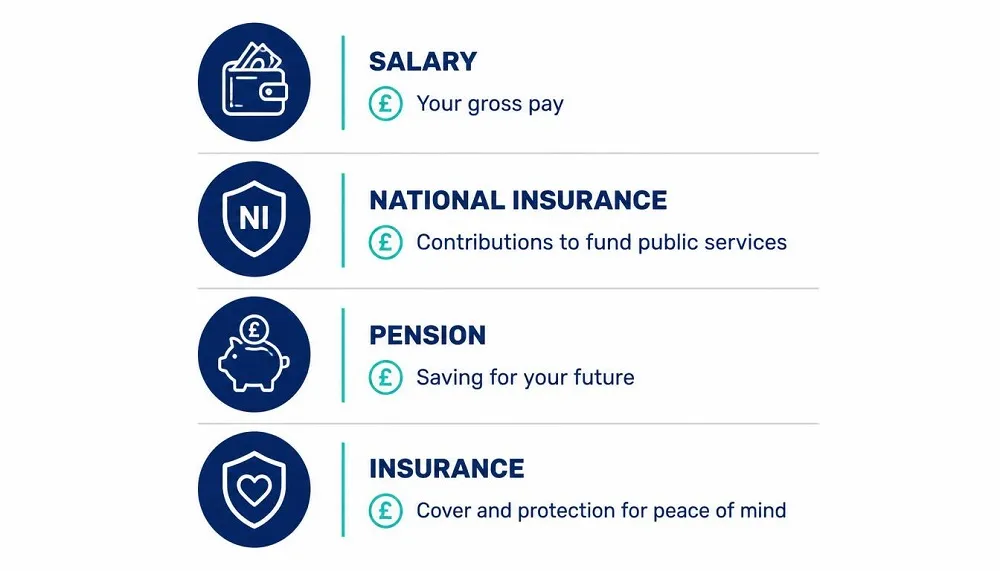
This is where many first-time employers get caught out, because the salary is only part of the bill. A realistic budget includes:
- Gross salary or wages, at least the National Minimum Wage or National Living Wage for their age group
- Employer’s National Insurance contributions, paid on top of salary once earnings pass a set threshold
- Workplace pension contributions, required once an eligible employee is automatically enrolled
- Employers’ liability insurance, a legal requirement covering at least £5 million, with fines of up to £2,500 per day if you are not covered
- Statutory sick pay and holiday pay, which you must budget for even in a quiet month
- Equipment, software, and training costs to get them working properly from day one
A useful rule of thumb some accountants use is to budget roughly 1.2 to 1.3 times the gross salary as your true cost, once National Insurance and pension contributions are included. Run these numbers before you commit to anything.
Employee, Worker, or Self-Employed: Getting the Status Right
This is the single most common source of confusion for first-time employers, and it is where the biggest legal risks hide.
Can I employ someone as self-employed? Not really, not in the way most people mean it. You cannot simply decide to pay someone as “self-employed” to avoid payroll and National Insurance if the reality of the working relationship looks like employment. HMRC and employment tribunals look at how the work actually happens, not what the paperwork says. If you control their hours, tell them how to do the job, and they cannot send someone else in their place, they are very likely an employee or a worker in the eyes of the law, whatever label you use.
UK law recognises three main categories:
- Employee: works under your direction, on agreed hours, with the fullest set of employment rights
- Worker: has more flexibility over how they work but still has core rights like the National Minimum Wage and holiday pay
- Self-employed: genuinely runs their own business, sets their own hours, can send a substitute, and invoices you for the work
Getting this wrong is not a minor paperwork issue. Misclassifying an employee as self-employed can lead to backdated tax, National Insurance bills, and employment tribunal claims for holiday pay or unfair dismissal.
Employing Staff for the First Time as a Sole Trader
Can I employ someone as a sole trader? Yes. Being a sole trader affects how your own business income is taxed, but it does not stop you from becoming an employer. You still need to register with HMRC as an employer, run PAYE, and meet all the same legal duties as a limited company.
The main practical difference is personal liability. As a sole trader, you are personally responsible for your business’s obligations, including anything owed to an employee, so employers’ liability insurance and clear contracts matter even more.
If you have not yet decided on your business structure, our comparison of sole trader versus limited company explains how this choice affects liability and tax before you take on staff.
How to Employ Someone in a Limited Company
The process is broadly the same as for a sole trader: register as an employer, set up payroll, and issue a contract. The main differences come down to who is doing the hiring.
If you are the sole director of your own limited company, hiring your first employee often means you are no longer the only person on the payroll, which can affect things like your PAYE scheme setup and access to certain reliefs such as the Employment Allowance. Check current eligibility on GOV.UK before assuming you qualify, since the rules on single-director companies have changed over time.
If you registered your company recently, it is worth revisiting our guide on registering a business in the UK, which covers the VAT and HMRC registration steps that often overlap with becoming an employer.
Employing Someone on a Casual Basis
“Casual worker” is not an official legal category in UK law. It is simply a descriptive term for someone engaged on a flexible, as-needed basis, often on a zero-hours contract. In law, that person will still be classed as an employee, a worker, or genuinely self-employed, depending on how the arrangement actually works day to day.
Casual and zero-hours staff are still entitled to:
- The National Minimum Wage or National Living Wage
- Statutory holiday pay, calculated on a pro-rata basis
- Statutory sick pay, once they meet the qualifying conditions
- Rest breaks and the 48-hour average weekly working time limit, unless they have opted out
A common mistake is assuming casual work means fewer obligations. It does not. If someone becomes a regular, expected part of your rota over time, their legal status can shift towards employee even if their contract still says “casual.” Review these arrangements regularly rather than setting a contract once and forgetting about it.
Step by Step: How to Hire Your First Employee in the UK
- Confirm you are financially and operationally ready, using the cost breakdown above
- Write a clear job description, listing the specific tasks and skills you actually need
- Decide on employment status (employee, worker, or genuinely self-employed) before you advertise
- Advertise the role on free platforms such as GOV.UK Find a Job, Indeed, or local business networks
- Interview and select a candidate, checking both skills and cultural fit for a small team
- Carry out a right to work check before their first day, using original documents or a Home Office share code
- Register as an employer with HMRC, ideally at least a few weeks before their first payday
- Set up PAYE payroll, using software such as HMRC’s Basic PAYE Tools, Xero, or Sage
- Arrange employers’ liability insurance, covering at least £5 million
- Issue a written statement of employment particulars on or before their first working day
- Assess and complete workplace pension auto-enrolment where the employee is eligible
- Run a basic health and safety check of the workplace, tools, and processes
What Must Be in a Written Employment Contract
UK law requires a written statement of employment particulars for every employee, provided on or before their first working day. At a minimum, it should cover:
- Job title and a brief description of duties
- Start date and, where relevant, how long a probationary period lasts
- Pay, including how and when it is paid
- Working hours and days
- Holiday entitlement
- Notice periods on both sides
- Where they will be working
A written contract protects both sides. It gives your new employee clarity, and it gives you a clear reference point if a dispute ever arises later.
Registering as an Employer With HMRC
You must register with HMRC before your new employee’s first payday, and it can take up to two weeks to receive your employer PAYE reference. Once registered, you are responsible for:
- Deducting Income Tax and National Insurance through PAYE
- Issuing payslips every pay period
- Submitting a Full Payment Submission to HMRC on or before each payday
- Paying HMRC monthly or quarterly, depending on the size of your payroll
Most small businesses use payroll software rather than doing this by hand, since it calculates deductions automatically and keeps the required records for you.
Common Mistakes First-Time Employers Make
- Registering with HMRC too late. Leaving it until the week of the first payday risks delays and penalties.
- Underestimating the true cost. Forgetting employer National Insurance and pension contributions is one of the most common budgeting errors.
- Skipping the right to work check. Civil penalties for employing someone without the right to work in the UK can run into tens of thousands of pounds per illegal worker.
- Calling someone self-employed to avoid payroll. If the working reality looks like employment, the label on paper will not protect you.
- No written contract. Relying on a verbal agreement leaves both sides exposed if something goes wrong.
Frequently Asked Questions
How do I hire my first employee for the first time?
Confirm you can afford the full cost, decide on the correct employment status, register as an employer with HMRC, set up payroll, arrange employers’ liability insurance, and issue a written contract before their first day.
Can I employ someone as self-employed to save on tax and National Insurance?
Not simply by choosing that label. Employment status depends on the reality of the working relationship, not the wording of a contract. Getting this wrong can lead to backdated tax bills and employment claims.
Do I need employers’ liability insurance for just one employee?
Yes, in almost all cases. It is a legal requirement as soon as you become an employer, with only narrow exceptions such as employing a close family member.
Is a casual worker the same as a self-employed contractor?
No. A casual worker is usually still an employee or a worker in law, with rights to the minimum wage and holiday pay. A genuinely self-employed contractor runs their own business and invoices you.
How long does it take to register as an employer with HMRC?
It can take up to two weeks to receive your PAYE reference, so register a few weeks before your new employee’s first payday.
Do sole traders have different rules for hiring compared with limited companies?
The core legal duties, such as HMRC registration, PAYE, and contracts, are the same for both. The main difference is that sole traders carry personal liability for the business, including its obligations to staff.
Final Thought
Hiring your first employee in the UK involves more admin than most business owners expect, but none of it is complicated once you take it step by step. Get your employment status decision right from the start, budget for the true cost rather than just the salary, and put your HMRC registration, insurance, and contract in place before day one. Most of the stress around first-time hiring comes from leaving these steps too late, not from the steps themselves.
James Okafor is a UK-based small business and employment writer with over 6 years of experience covering payroll, HR compliance, and recruitment for first-time employers.