

Business Grants for Small Businesses in the UK: The Complete 2026 Guide
If you have typed “business grants for small businesses UK” into Google, you are probably after one thing: real money you do not have to pay back, and a clear idea of whether you can actually get it.
The good news is that small business grants UK-wide are genuinely large and varied, and they form a big part of the UK business funding landscape alongside loans and investment. The tricky part is that it is scattered across government departments, local councils, charities, and private schemes, each with their own rules. This guide pulls it all together in one place, explains how grants actually work, and walks you through the application process without wasting weeks on schemes you were never eligible for.
Quick Answer
What are business grants for small businesses in the UK?
Business grants are funds provided by government bodies, local councils, charities, or private organisations to help businesses grow. Unlike loans, grants usually do not need to be repaid, but applicants must meet eligibility criteria and use the money for approved purposes.
What Counts as a Business Grant (And Why It Differs From a Loan)
A business grant is money given to a company for a specific purpose, such as buying equipment, hiring staff, or developing a new product. You do not repay it, and you do not give away any shares in your business.
That is the key difference from a loan or investment. A loan needs to be repaid with interest. Investment means giving someone a stake in your company. A grant is neither. In exchange, the grant provider usually expects you to spend the money on exactly what you said you would, report back on progress, and sometimes match a portion of the funding yourself.
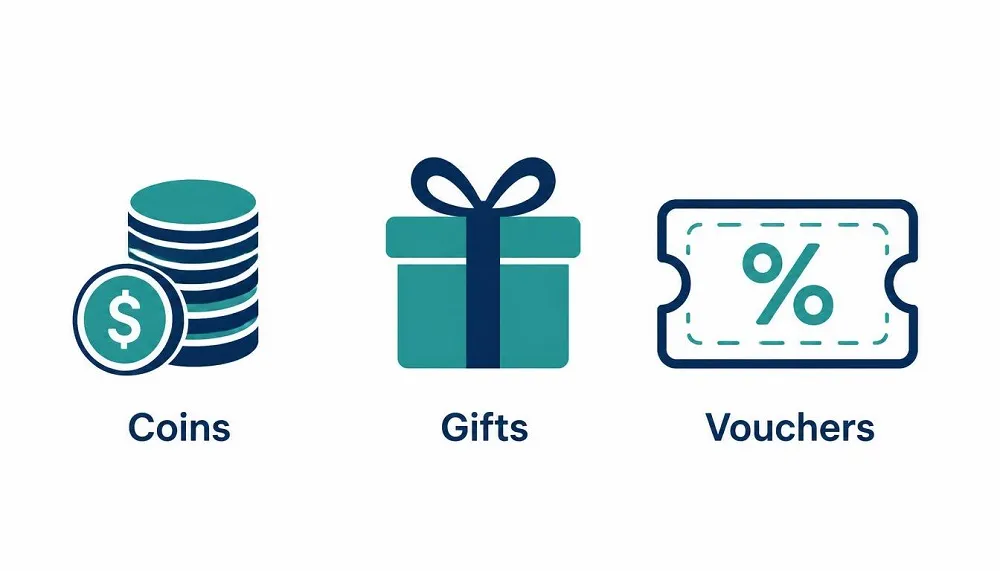
Most grants fall into three broad categories:
- Cash grants: a straightforward payment towards a stated cost, such as new tools or a marketing campaign.
- Grants in kind: support such as free training, mentoring, or equipment rather than cash.
- Vouchers and discounts: money off a specific product or service, such as broadband installation or an electric vehicle.
One thing many first-time applicants miss: most cash grants are taxable. HMRC generally treats grant income as part of your business profits, so it is worth telling your accountant before you spend it.
Who Can Actually Get Business Grants for Small Businesses in the UK
Business grant eligibility varies enormously between schemes, but most SME grants look at a similar set of factors:
- Business size: usually fewer than 250 employees, often much smaller for local schemes
- Location: many grants are restricted to a specific council area, region, or nation
- Trading history: some want brand-new startups, others want at least a year of trading
- Sector: manufacturing, tech, green energy, and creative industries often have dedicated pots
- Purpose: the grant must match what you plan to spend the money on
Because of this, there is rarely a single “grant for small businesses” that everyone qualifies for. Instead, the goal is finding the two or three schemes that genuinely fit your business, rather than applying broadly and hoping.
| Business Grants | Business Loans |
|---|---|
| No repayment | Repayment required |
| Competitive application | Easier to obtain in many cases |
| Usually project-specific | Flexible use of funds |
| No equity given up | No equity given up |
| Often requires reporting | No grant reporting |
Types of Business Grants Available in 2026
Government Grants
National government business grants tend to focus on innovation, exports, and specific economic priorities. Search the Find a Grant service and the Business Finance Support Finder on GOV.UK, which list active schemes and let you filter by region, sector, and business size.
Local Council and Growth Hub Grants
This is where most small businesses actually find local business grants. Local authorities, Local Enterprise Partnerships, and regional Growth Hubs run smaller schemes, often between £500 and £25,000, aimed at businesses trading in their area. A Growth Hub will not usually hand you the money directly, but staff there offer free business support funding advice, and can point you towards live schemes you might otherwise never hear about.
Innovation and R&D Grants
Innovate UK runs some of the biggest competitive innovation grants UK-wide, funding projects with genuine research or technical risk. This innovation funding UK scheme can run into hundreds of thousands of pounds, but the application process is thorough, and competition is fierce. If your business does not involve developing something genuinely new, this route is unlikely to apply to you.
Sector Specific Grants
Certain industries have their own funding streams. Examples include gigabit broadband vouchers for rural connectivity, plug-in van grants for low-emission vehicles, and heritage grants for projects protecting historic buildings or skills. If you work in a niche sector, it is worth checking whether a trade body or industry association runs its own fund.
Free Government Grants for Small Business: Where to Start
“Free government grants” and “free business funding UK” are among the most searched phrases on this topic, and it is worth being direct about what they mean. Government grants are free in the sense that you never repay them, but they are not free money handed out on request. Every scheme has criteria, a limited budget, and a competitive application process.
The most reliable starting points are:
- Find a Grant (GOV.UK) for national schemes
- Your local council’s business support page for area-specific funding
- Your nearest Growth Hub for regional opportunities and one-to-one advice
- British Business Bank guidance pages for an overview of what is currently available
Avoid any site or advert promising a guaranteed grant in exchange for an upfront fee. Legitimate grant providers do not charge you to apply.
Government Grants for New Business Owners
If you are pre-launch or have only just registered your company, most grants for new businesses and government grants for startups UK-wide fall into a few familiar shapes:
- Direct grants towards start-up costs such as equipment, premises, or training
- The King’s Trust Start Up Grant, offering up to £5,000 for young entrepreneurs, alongside optional Start Up Loans of up to £25,000
- Local start-up funds, such as council schemes offering £500 to £2,500 towards launch costs, usually requiring you to match a percentage yourself
Before applying anywhere, have a simple business plan and a cash flow forecast ready. Almost every grant provider asks for both, even for small amounts.
If you have not yet registered your business, it is worth reading our guide on starting a business in the UK first, since several grants require proof of registration with Companies House before you can apply.
Startup Grants UK: Options for Businesses Under Three Years Old
Many startup grants UK-wide specifically target businesses in their first one to three years of trading, on the logic that this is when cash flow is tightest, and failure risk is highest. Look out for wording like “pre-start,” “early stage,” or “trading for less than 36 months” in eligibility criteria.
Typical examples include regional start-up funds offering £1,000 to £5,000 towards early costs, and charitable schemes such as UnLtd’s Funding Futures Programme, aimed at younger founders with a social or community angle to their business.
If you are still deciding how to structure your company before applying, our comparison of sole trader versus limited company explains how your legal structure can affect which grants you are eligible for, since some schemes only accept registered companies.
Business Startup Grants for Over 30s
Despite the name, there is no single “over 30s grant.” Instead, this search usually reflects frustration that many headline youth schemes, such as the Prince’s Trust and King’s Trust programmes, cap eligibility at 18 to 30. The reassuring news is that the vast majority of UK business grants have no upper age limit at all. Age only becomes relevant where a scheme is explicitly youth focused.
If you are over 30, your best routes are:
- Local council and Growth Hub grants, which are rarely age restricted
- Sector-specific and innovation grants, judged on the idea rather than your age
- Grants tied to circumstance rather than age, such as returning to work, redundancy support, or veteran-specific funding
In practice, an experienced founder often has an advantage in grant applications, since assessors look closely at your ability to deliver on a business plan, and a proven track record helps that case.
Grants for Black and Ethnic Minority Business Owners
Access to finance remains a genuine barrier for many Black and ethnic minority entrepreneurs in the UK, and a number of schemes exist specifically to address this. Recent examples include the F100 Growth Fund, a partnership offering up to £15,000 in equity-free funding to Black-led UK businesses with an existing product, and UnLtd’s Funding Futures Programme, which reserves half of its awards for Black, Asian, and minority ethnic or disabled entrepreneurs.
Corporate-backed schemes also appear regularly, including partnerships between banks or retailers and Black business networks, often offering funding alongside mentoring rather than cash alone. These schemes change often, so a business network such as the Black Business Network or your local Growth Hub is a more reliable ongoing source than a single fixed list.
How Much Money Can You Actually Get
Grant sizes vary hugely depending on the scheme:
| Grant Type | Typical Range |
|---|---|
| Local council start-up grants | £500 to £2,500 |
| Regional growth grants | £1,000 to £25,000 |
| Sector or demographic-specific funds | £5,000 to £20,000 |
| Innovation and R&D grants | £25,000 to £500,000+ |
Most grants also require match funding, meaning you contribute a percentage of the total cost yourself, commonly 25% to 50%. Very few schemes cover 100% of a project, so budget accordingly before you apply.
How to Find Grants That Actually Fit Your Business
Rather than searching broadly and hoping, work through these steps in order. This applies whether you are looking at grants for small businesses in England or schemes specific to Scotland, Wales, and Northern Ireland:
- Define your purpose first. Are you funding equipment, staff, marketing, or research? This narrows the search dramatically.
- Check your postcode against local council business grants. Search “[your council name] business grants” as a starting point.
- Use Find a Grant and the Business Finance Support Finder to filter by sector and business size.
- Contact your local Growth Hub. A short phone call often surfaces schemes that never appear in search results.
- Ask your accountant. Many have seen similar clients succeed with specific local or sector funds.
How to Apply for Business Grants in the UK: Step by Step
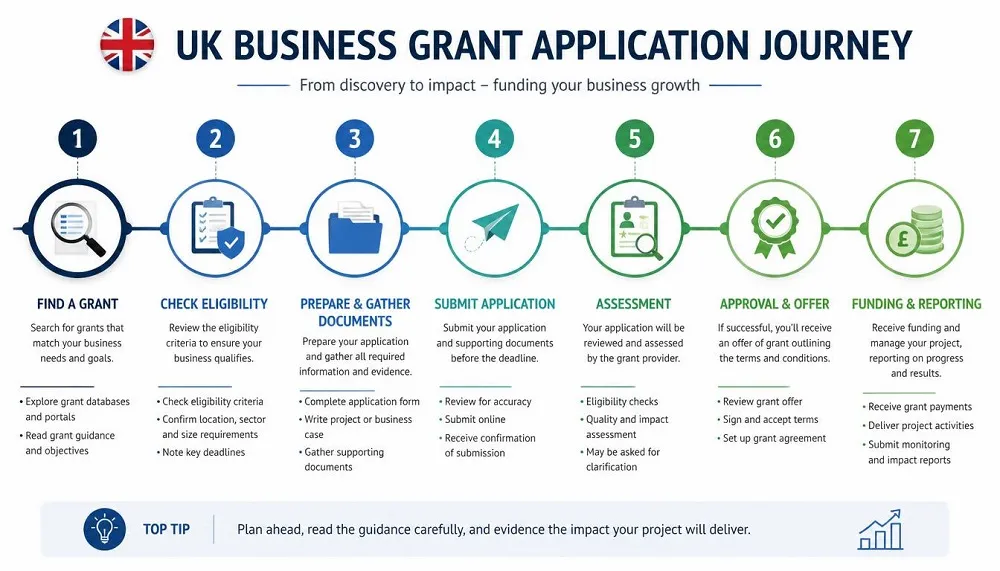
- Read the full eligibility criteria before you start. A near match still counts as ineligible.
- Prepare your core documents: a business plan, cash flow forecast, and proof of registration.
- Contact the grant provider with questions before submitting, if the guidance allows it. This shows genuine engagement and can clarify borderline eligibility.
- Write your application in plain language. Assessors read dozens of applications; clarity beats jargon every time.
- Show the outcome, not just the activity. Explain what the grant will let you achieve, such as jobs created or turnover increased, not only what you will spend it on.
- Submit ahead of the deadline and keep a copy of everything you send.
- Expect stages. Successful applicants are often paid in instalments and asked for progress reports, so budget time for admin after you win the grant.
Common Mistakes That Get Applications Rejected
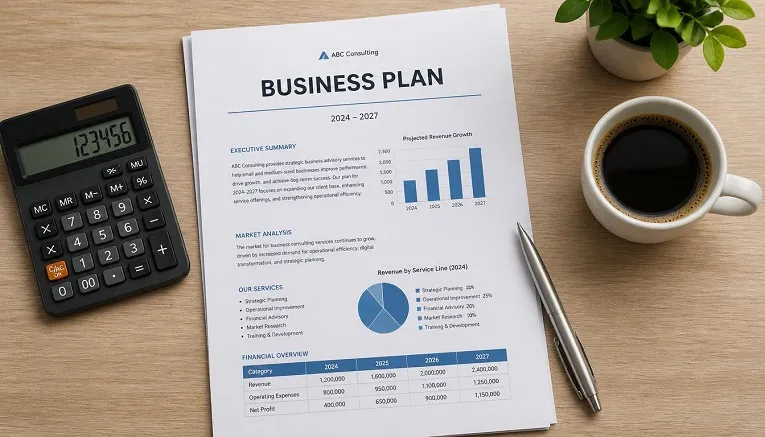
- Applying without matching funds ready. If a scheme needs 50% match funding, have proof you can provide it.
- Vague spending plans. “General business costs” is rejected far more often than a specific, costed plan.
- Missing the geographic or sector criteria. Always check location and industry rules first; this eliminates the most applications.
- Weak or missing business plan. Even a simple one-page plan is better than none.
- Applying too late. Many schemes close early once their budget is allocated, regardless of the published deadline.
Grants Versus Loans and Other Funding: Which Is Right for You
Grants are attractive because you keep full ownership and never repay the money, but they are competitive, slow, and rarely cover a full project on their own. A Start Up Loan, by contrast, is faster to access and easier to qualify for, but comes with interest and monthly repayments. Equity investment can provide larger sums quickly, but means giving up a share of your company.
Most successful small businesses combine more than one source: a grant for a specific project, a loan for working capital, and personal or family investment to cover the gap. If you are still working out your overall funding mix, it is worth reviewing typical startup costs for a small business so you know exactly how much you need before choosing which type of funding to chase.
Frequently Asked Questions
Are business grants really free money?
Yes, in the sense that you never repay them or give up equity. However, most grants are competitive, require match funding, and are taxable as business income.
Can I get a grant to start a business with no money at all?
It is possible, but difficult. Most grant providers want to see that you can contribute some funding or resources yourself, even a small percentage, as evidence of commitment.
Do I have to pay tax on a business grant?
Generally yes. HMRC usually treats grant income as part of your taxable business profits, so speak to an accountant about how it affects your tax return.
How long does a grant application take to process? This varies widely, from a few weeks for small local grants to several months for competitive national schemes such as Innovate UK.
Can sole traders apply for business grants?
Many can, though some schemes require a registered limited company. Grants for self-employed UK workers do exist, particularly at local council level, but always check the specific eligibility wording before applying.
Are there business grants for limited companies specifically?
Yes. Some schemes, especially Innovate UK and larger regional growth funds, only accept registered limited companies rather than sole traders, so your business structure can open or close certain doors.
Where is the best place to start looking?
For most small businesses, the GOV.UK Find a Grant service, your local council’s business pages, and your nearest Growth Hub cover the majority of realistic options.
Final Thought
Business grants for small businesses in the UK are real, varied, and worth pursuing, but they reward preparation over speed. Narrow your search to schemes that genuinely match your location, sector, and stage, get your paperwork ready before you apply, and treat rejection as normal rather than a sign to give up. Most founders who secure funding do so on their second or third application, not their first.
- Identify your funding need.
- Search national and local grants.
- Check eligibility carefully.
- Prepare your supporting documents.
- Apply early.
- Keep copies of all submissions.
- Continue monitoring new funding opportunities.
Sarah Whitfield is a UK-based small business finance writer with over 7 years of experience covering startup funding, grants, and government support schemes for founders across England, Scotland, Wales, and Northern Ireland.