An electric car through salary sacrifice is one of the cheapest ways for a small business to put an employee behind the wheel of a new car. The employee gives up part of their gross salary, the company leases the car, and the tax saving on both sides does most of the work. The scheme is growing fast: salary sacrifice cars on UK roads reached 209,119 in the third quarter of 2025, up 123.4% on the year before, and about 83% of them were battery electric.
The reason is a single number. A fully electric company car is taxed on just 4% of its list price in 2026/27, while a petrol or diesel car of the same value can be taxed on up to 37%. That gap turns a perk that looks expensive into a deal that saves money on both sides. But the scheme has real catches, from minimum wage limits to pension effects, so it pays to understand the mechanics before offering it.
What is EV salary sacrifice?
Salary sacrifice is a formal change to an employment contract. The employee agrees to a lower gross salary, and in return the employer provides a non-cash benefit, in this case a leased electric car. The lease usually bundles insurance, road tax, servicing and tyres into one monthly payment.
The saving comes from timing: the sacrificed salary never passes through payroll, so no Income Tax or employee National Insurance is charged on it. The car is a taxable benefit in kind, but at the low electric rate the charge is small compared with the tax saved. The employer likewise saves the 15% employer National Insurance on the sacrificed salary.
Most schemes run through a specialist provider such as Octopus Electric Vehicles, Zenith or The Electric Car Scheme, which supplies the car, handles the lease and insurance, and gives staff a portal to choose from.
Why the tax works: the 4% benefit in kind rate
Company car tax is charged as a percentage of the car’s list price (the P11D value), set by CO2 emissions. For a fully electric car, the rate is 4% in 2026/27, up from 3% in 2025/26. It is scheduled to rise to 5% in 2027/28, 7% in 2028/29 and 9% in 2029/30.
| Tax year | Fully electric car (0g/km) benefit in kind rate |
|---|---|
| 2025/26 | 3% |
| 2026/27 | 4% |
| 2027/28 | 5% |
| 2028/29 | 7% |
| 2029/30 | 9% |
By comparison, a petrol car is taxed at 25% to 37%, so on a £40,000 car the taxable benefit is £1,600 a year for electric and up to £14,800 for a high-emission petrol car.
There is a second reason the scheme works. The Optional Remuneration Arrangement rules, introduced in April 2017, normally tax a salary sacrifice benefit on the higher of the salary given up and the benefit in kind value. But cars with CO2 emissions of 75g/km or less, which includes every fully electric car, are explicitly excluded. HMRC taxes the car on its normal benefit in kind value only: sacrifice £6,000 of salary and you are taxed on 4% of the car’s list price, not on £6,000. Our guide to company car tax explains the benefit in kind calculation in full.
Worked example: what the employee saves
Take an employee earning £45,000 who sacrifices £500 a month (£6,000 a year) for a £40,000 electric car. As a basic rate taxpayer, the salary she gives up would have been taxed at 20% Income Tax and 8% employee National Insurance.
Tax and National Insurance saved: £6,000 at 28% is £1,680 a year (£1,200 Income Tax, £480 National Insurance).
Benefit in kind tax: £40,000 at 4% is £1,600 of taxable benefit, costing her £320 a year at 20% Income Tax, about £27 a month through payroll.
Net saving: £1,680 minus £320 is £1,360 a year. The car, including insurance, servicing and road tax, effectively costs her £4,640 a year instead of £6,000. A higher rate taxpayer saves more, because each pound sacrificed would have been taxed at 40% Income Tax plus 2% National Insurance, while the benefit in kind tax is 40% of £1,600, or £640 a year.
The saving is bigger still when the sacrificed salary pulls someone below a threshold. If an employee earns £70,000 and sacrifices £10,000, their adjusted net income falls to £60,000, the point where the High Income Child Benefit Charge starts, which can restore Child Benefit that would otherwise have been lost.
Worked example: what the employer saves
The employer saves 15% employer National Insurance on the £6,000 sacrificed, which is £900 a year, and pays Class 1A National Insurance at 15% on the £1,600 benefit in kind value, which is £240 a year.
Net employer saving: £900 minus £240 is £660 a year per employee. With five employees in the scheme, that is £3,300 a year, which often covers the provider’s administration fee. Our guide to employer National Insurance contributions sets out the 15% rate and the thresholds it applies to.
Who should think twice
The scheme is not right for everyone, and the risks sit with the employee.
The National Minimum Wage is a hard floor. The sacrifice cannot take an employee’s cash pay below the minimum wage, which is £12.71 an hour for workers aged 21 and over from 1 April 2026, so payroll must check the maths before the agreement is signed.
Lower gross pay reduces anything calculated from salary: statutory maternity pay, statutory sick pay and redundancy pay are all based on average earnings, so a large sacrifice can reduce them. Pension contributions fall too if the scheme is a percentage of salary, although some employers base contributions on the pre-sacrifice salary. Ask the question before signing, not after.
Mortgage and loan applications also look at gross salary, so a sacrifice can reduce the amount a lender will offer. Student loan repayments fall too, which means the loan is repaid more slowly and interest builds up.
There is also the commitment. Most leases run for two to four years, and leaving the job usually triggers an early termination charge. Good schemes include life-event clauses letting the employee return the car without penalty on redundancy or long-term sickness, but terms vary by provider. Read the early termination clause before choosing one.
Directors of small limited companies can use the scheme too, and for a one-person company it can be very effective, since the director saves on both sides. But it needs a proper employment contract and a payroll that can handle the benefit in kind reporting, and a director who only takes dividends and no salary cannot sacrifice salary they do not have. See our payroll guide for small businesses for how the reporting works.
Self-employed sole traders cannot use salary sacrifice at all, since there is no employer and no salary to sacrifice.
How to set up a scheme in a small business
Setting one up is simpler than most employers expect, and a provider does most of the work.
First, pick a provider and compare more than the monthly lease price. Check the early termination terms, whether insurance and maintenance are included, and whether the provider handles the benefit in kind reporting. Get quotes for the same car from two providers; prices vary by hundreds of pounds a month on some models.
Second, check eligibility across your team. Staff need to be on payroll and earn enough that the sacrifice stays above the National Minimum Wage.
Third, change the employment contracts. Salary sacrifice is a contractual change, not a payroll tweak. Each participating employee signs an agreement setting out the new salary, the car, the term, and what happens if they leave.
Fourth, set up the reporting. The benefit in kind must be reported to HMRC, either through a P11D at the end of the tax year or through payrolling, where the tax is collected monthly through PAYE. From 6 April 2027, payrolling benefits becomes mandatory for most benefits, so a scheme set up now should be built on payrolling. Our guide to benefits in kind and P11D reporting explains both routes.
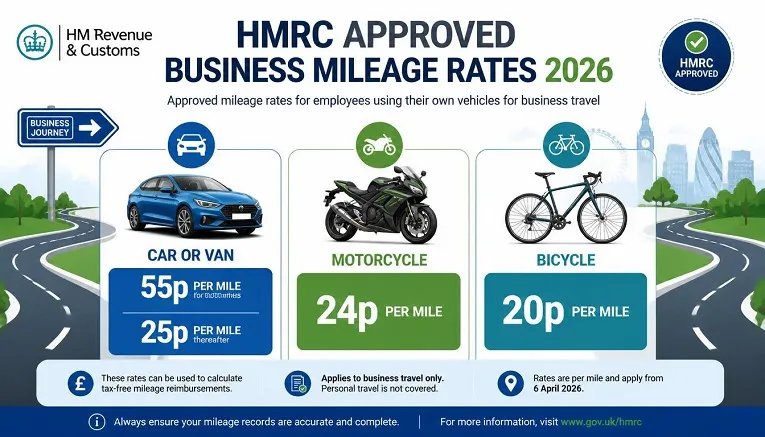
Fifth, think about charging. The advisory electricity rate for company cars is currently 7p per mile, which the employer can pay tax-free for business miles, and a workplace chargepoint can be part-funded through the Workplace Charging Scheme.
Five mistakes that cost small businesses money
First, offering the scheme to staff whose pay would drop below the National Minimum Wage. That is unlawful, and HMRC will not accept the sacrifice. Second, forgetting the pension effect: if contributions are a percentage of the reduced salary, the employee’s pension pot grows more slowly. Third, choosing a petrol or plug-in hybrid car without checking the benefit in kind rate, which can be 17% or more. Fourth, ignoring the early termination clause, then facing a large fee when an employee resigns in year one. Fifth, running the scheme on P11Ds when payrolling would collect the tax monthly.
What to do this week
If you employ staff who drive, get two provider quotes for a popular electric model and run the numbers for one employee on your actual payroll figures. Check that the sacrifice stays above the National Minimum Wage, confirm whether pension contributions are based on pre-sacrifice salary, and read the early termination terms. The 4% rate will not last forever, it is already scheduled to reach 9% by 2029/30, so the biggest savings are available to businesses that set a scheme up now.
Related reading
Corporation Tax for Small Businesses UK: 2026 Guide | Business Mine
Business Days UK Explained | Business Mine