Startup Costs for a Small Business: The Complete Guide to Budgeting and Planning
If you are thinking about starting a small business, you have probably asked yourself the question almost every new owner asks: how much is this actually going to cost? The honest answer depends a lot on what kind of business you are building, but there are real numbers, real categories, and a real process you can follow to get a solid estimate instead of a guess.
This guide breaks down what counts as a startup cost, what typical ranges look like across business types, how to calculate your own total, and what most people forget to budget for.
What Are Startup Costs and Why They Matter
Startup costs are the expenses you take on before your business starts generating steady income. They cover everything from registering your business to buying your first round of equipment to keeping the lights on while you build up customers. The U.S. Small Business Administration describes this process simply: figure out your expenses now so you can request funding, attract investors, and estimate when you will turn a profit.
How Startup Costs Differ From Operating Costs
This distinction trips a lot of people up. Startup costs are what you spend to get the business off the ground: registration fees, your first batch of inventory, a logo design. Operating costs are what it takes to keep running once you are open, like monthly rent, payroll, and software subscriptions. Here is the part most guides skip: many ongoing expenses, like rent and subscriptions, belong in both buckets. You need to budget for them as startup costs too, since you will be paying them during the months before your business earns enough to cover itself.
Why Underestimating Startup Costs Is a Leading Cause of Business Failure
Running out of money is one of the most common reasons small businesses fail. According to a 2023 survey, 38 percent of startups fail because they run out of money. A separate study found that almost a third of new businesses, 31.6 percent, launched with less than $5,000 in startup capital, leaving almost no room for error if anything went wrong.
Underestimating costs is not always about being careless. It usually happens because new owners price out the obvious expenses, like a website or initial inventory, but forget the slower drip of monthly costs that pile up while revenue is still ramping up.
Why a Clear Cost Estimate Matters for Loans, Investors, and Your Own Planning
A well-researched startup cost estimate does three things at once. It tells you how much money you actually need to raise. It gives lenders and investors something concrete to evaluate. And it gives you an early warning system, since if your estimate comes back higher than you can realistically fund, you know to rework your plan before you have spent a dollar.
Quick summary: Startup costs are the one-time and short-term expenses needed to launch your business, separate from the ongoing costs of running it. Underestimating them is a top cause of business failure, so a realistic estimate protects both your funding chances and your sanity.
The Two (and a Half) Types of Startup Costs
Most guides on this topic split startup costs into two buckets. We think there is a third bucket that deserves equal attention, because skipping it is exactly what gets new business owners into trouble.
One-Time Costs Explained
One-time costs are expenses you pay exactly once to get your business open. Think incorporation fees, your first equipment purchase, a website build, or signage for your storefront. Once paid, these costs do not repeat.
Ongoing or Recurring Costs Explained
Ongoing costs are the expenses that keep showing up every month, whether or not you have made a single sale yet. Rent, utilities, software subscriptions, and any salaries you are paying before launch all fall here. The key insight is that you need to budget for several months of these costs, not just one, because it rarely takes a single month to reach profitability.
The Contingency Fund: The Most Overlooked Category
Here is the piece most startup cost guides leave out or mention only in passing. A contingency fund, also called a cash buffer, is money set aside specifically for the costs you did not see coming. Equipment breaks. A supplier raises their prices. A permit takes longer to process than expected. Industry guidance commonly recommends setting aside 10 to 20 percent of your total estimated costs as a buffer, precisely because most founders underestimate their real costs by 25 to 50 percent once they are actually in motion.
Fixed Costs vs. Variable Costs
This is a related but separate distinction worth understanding. Fixed costs stay the same no matter how much you sell, like your monthly rent or a salaried employee’s pay. Variable costs rise and fall with your sales volume, like raw materials or shipping. Knowing which of your costs are fixed and which are variable will help you later when you calculate your break-even point, since fixed costs are the baseline you need to cover every single month regardless of how business is going.
Quick summary: Budget for one-time costs, ongoing costs across your pre-revenue period, and a contingency fund of 10 to 20 percent on top of both. Skipping the contingency fund is one of the fastest ways to run out of cash before you find your footing.
Common Startup Cost Categories Every Small Business Should Budget For
Nearly every small business, regardless of industry, runs into some version of these cost categories. Use this as your master checklist, then cross off anything that genuinely does not apply to your business.
Business Registration and Legal Structure Fees
Unless you operate as a sole proprietor under your own name, you will need to register your business with your state, typically as an LLC or corporation. Filing fees vary by state, ranging from around $40 to $500.
Licenses and Permits
Most businesses need at least a general business license, and many need industry-specific permits too, such as health permits for food businesses. Processing and recurring fees commonly run $50 to a few hundred dollars per year, though regulated industries can run higher.
Equipment, Supplies, and Inventory
This category swings wildly by business type. A home-based consulting business might need just a laptop and some software. A restaurant or construction business may need $100,000 or more in equipment before opening day. Retail and manufacturing businesses also need to budget separately for their first round of inventory, distinct from the equipment used to run the business.
Technology and Software
Most businesses need a basic stack: accounting software, a point-of-sale system if selling in person, and tools for communication and project management. These costs add up fast, since many tools bill monthly per user.
Marketing, Branding, and Website Costs
This covers your logo, business cards, initial website build, and first marketing push. Small businesses typically spend 1 to 4 percent of revenue on advertising over time, though new businesses often spend more upfront just to get noticed, since there is no existing customer base to rely on yet.
Professional Services
Lawyers, accountants, and business consultants typically charge $300 to $1,500 depending on complexity. This is easy to underestimate, since a quick legal question can turn into several billable hours if your business structure is at all unusual.
Insurance
Most small businesses need general liability insurance at minimum, and if you have employees, workers’ compensation coverage is often required by law. A business owner’s policy that bundles general liability, property, and business income coverage can be more cost-effective than buying each separately.
Rent, Utilities, and Location Costs
If you need a physical space, this is often one of your largest startup expenses. Retail spaces commonly run around $24 per square foot, office space closer to $35 per square foot, and utilities average roughly $2.10 per square foot on top of that. You will also typically need a security deposit upfront, often equal to one or two months of rent.
Payroll and Employee-Related Costs
If you plan to hire before you launch, payroll is rarely your only employee-related expense.
Why an Employee Costs More Than Their Salary Alone
The SBA estimates that an employee actually costs your business 1.25 to 1.4 times their base salary once you account for taxes, benefits, and related overhead. So an employee with a $50,000 salary really costs somewhere between $62,500 and $70,000 once everything is factored in. This is one of the most common places new business owners get caught off guard, because they budget the salary line and stop there.
Quick summary: Your startup budget should touch on registration, licensing, equipment, technology, marketing, professional services, insurance, location costs, and payroll. Few businesses need every category at full strength, but almost every business needs to at least consider each one.
How Much Does It Actually Cost to Start a Small Business?
Real numbers help more than vague ranges, so here is what the data actually shows.
National Averages and Typical Ranges
Survey data varies depending on the source and the year, but the picture is fairly consistent. One recent analysis found that 27 percent of small businesses cost between $50,000 and $175,000 to start, while another 27 percent fall into the higher $250,000 to $500,000 range. On the lower end, the SBA estimates that most home-based businesses only need to invest about $2,000 to $5,000 to get started.
Cost by Business Type: Online, Mobile, and Storefront Compared
A survey of 700 small business owners found a clear pattern by business model. Online-only businesses spent an average of $35,000 in their first year. Mobile businesses, meaning those that operate out of a vehicle or travel to clients, spent an average of $92,500. Storefront businesses spent the most, averaging $100,000. Keep in mind that most mobile and storefront owners also run an online presence alongside their physical operation, which is part of why their totals run higher.
Cost by Industry: Cheapest vs. Most Expensive Businesses to Start
Service businesses sit firmly at the low end. Cleaning businesses, lawn care, pressure washing, and consulting can often launch for under $10,000, since they need minimal equipment and no storefront. Dog walking can start for as little as $500 to $3,000. At the other end, restaurants face some of the highest costs of any small business category, with one survey of over 350 owners finding a median cost of $375,000 to open an independent restaurant once you factor in equipment, licensing, and the physical build-out.
How Your State or City Changes Your Startup Costs
This factor gets surprisingly little attention considering how much it can move your total. Beyond the general cost of living, state-level differences come mainly from three places: LLC filing fees, insurance requirements, and local permit costs. One dataset covering all 50 states found cost multipliers ranging from 0.84 in lower-cost states like Mississippi and West Virginia, up to 1.43 in Hawaii. In practical terms, the same business can cost 70 percent more in one state than another, even before you account for differences in rent or wages.
Quick summary: Most small businesses fall somewhere between a few thousand dollars for lean service businesses and several hundred thousand for restaurants or other physical, equipment-heavy operations. Your state and your business model both move that number more than people expect.
Service vs. Product vs. Brick-and-Mortar: A Side-by-Side Cost Comparison
Your business model shapes your entire cost structure, so it helps to see the three main models laid out side by side.
Service-Based Business Cost Structure
Service businesses, like consulting, freelancing, or cleaning, typically have the lowest startup costs because they skip inventory and often skip a storefront too. Your main costs tend to be your own time, basic tools or certifications, insurance, and marketing to find your first clients. The tradeoff is that your income depends entirely on hours worked or projects completed, so there is a natural ceiling unless you eventually hire help.
Product and Inventory-Based Business Cost Structure
Product businesses need to fund inventory before they make a single sale, which is the single biggest difference from a service business. You also need to think about storage, shipping, and potentially manufacturing or sourcing costs. Dropshipping is a popular way to soften this cost, since you only purchase inventory after a customer has already paid for it, but this comes with thinner margins in exchange for lower upfront risk.
Brick-and-Mortar Business Cost Structure
Physical locations bring the highest fixed costs of the three models: rent, a security deposit, build-out or renovation, and location-specific permits. The advantage is that a physical presence can build trust and visibility faster than a purely online business, which is part of why storefront owners in the survey mentioned earlier also reported the highest average first-year revenue of the three groups, at $105,000.
Comparison Table: Typical Cost Categories by Business Model
| Cost Category | Service Business | Product Business | Brick-and-Mortar |
|---|---|---|---|
| Inventory | Rarely needed | Major upfront cost | Major upfront cost |
| Equipment | Minimal | Moderate | Often substantial |
| Rent/location | Often none | Warehouse possible | Always required |
| Insurance | Liability coverage | Liability and product coverage | Liability and property coverage |
| Typical starting range | $500 to $10,000 | $5,000 to $50,000+ | $50,000 to $375,000+ |
How to Calculate Your Total Startup Costs (Step by Step)
This is the part that turns all the categories above into one usable number you can actually plan around.
Step 1: List Every Expense You Can Think Of
Start broad. Write down every cost you can imagine, even ones you are not sure apply yet. It is much easier to remove an item later than to realize you missed one after you have already raised funding.
Step 2: Separate One-Time Costs From Ongoing Costs
Go through your list and tag each item as either one-time or ongoing. This single step prevents the most common calculation mistake, which is treating a recurring expense like rent as if you only need to pay it once.
Step 3: Estimate How Many Months Until Break-Even
Be honest here rather than optimistic. If you expect to reach break-even in month six, you need six months of ongoing costs in your budget, not just one. Most small businesses spend between $3,000 and $15,000 per month on ongoing expenses in their first year, so this number multiplies quickly.
Step 4: Add a Contingency Reserve
Take your combined one-time and ongoing total and add 10 to 20 percent on top as your buffer. This is not optional padding. It is the difference between surviving an unexpected cost and scrambling for emergency funding mid-launch.
Step 5: Apply the Total Startup Cost Formula
Here is the complete formula, combining everything above into one calculation:
Total Startup Costs = One-Time Costs + (Monthly Ongoing Costs x Months to Break-Even) + Contingency Reserve
Worked Example: Calculating Startup Costs for a Real Small Business
Let’s walk through a simple example. Imagine a two-person design studio.
Their one-time costs come to $5,750: $1,200 for legal and accounting setup, $550 for a website, $2,400 for equipment, and $1,600 for office furnishings.
Their monthly ongoing costs come to $3,035: $1,040 for a part-time employee, $900 for rent, $345 for utilities, and $750 for a marketing consultant.
If they expect to reach break-even in six months, their ongoing total becomes $3,035 x 6, which is $18,210.
Adding those together: $5,750 + $18,210 equals $23,960 before any buffer.
A 15 percent contingency reserve adds $3,594, bringing their total realistic startup budget to roughly $27,554.
This is the number they would bring to a lender or use to set their fundraising target, not the smaller $5,750 figure that only covers day-one expenses.
Quick summary: Calculate your total startup cost by adding your one-time expenses, your ongoing expenses multiplied by the number of months until you expect to break even, and a contingency reserve of 10 to 20 percent on top of both.
How Startup Costs Affect Your Taxes
This is an area where a little bit of correct information can save you real money, and it is one that most guides barely touch.
Are Startup Costs Tax-Deductible?
Yes, in most cases. The IRS allows many startup expenses to be deducted, provided they meet the standard test of being an “ordinary and necessary” expense for your type of business.
The $5,000 First-Year Deduction and How It Works
Under federal tax rules, a new business may deduct up to $5,000 in startup costs in its first year, and separately, up to $5,000 in organizational costs. Any remaining costs beyond that get spread out and deducted gradually over a period of years rather than all at once.
The $50,000 Phase-Out Threshold Explained Simply
Here is the part that catches people off guard. That $5,000 first-year deduction is not unlimited. It gets reduced dollar for dollar once your total startup or organizational costs go above $50,000. So if your total startup costs come to $53,000, your immediate deduction shrinks by $3,000. Businesses with very high startup costs may find that this immediate deduction disappears almost entirely.
Startup Costs vs. Organizational Costs for Tax Purposes
These are treated as two separate buckets by the IRS. Startup costs generally cover things like market research and costs to investigate or create the business. Organizational costs cover the legal and administrative costs of actually forming the entity, like incorporation fees. Each gets its own $5,000 first-year allowance.
Why You Should Talk to an Accountant Before Filing
Tax rules around startup and organizational costs have specific definitions and timing requirements that are easy to get wrong without guidance. A short consultation with an accountant before your first tax filing is one of the highest-value professional services purchases you can make as a new business owner.
Quick summary: You can typically deduct up to $5,000 in startup costs and another $5,000 in organizational costs in your first year, but this benefit phases out once total costs exceed $50,000. An accountant can help you apply this correctly to your specific situation.
How Lenders and Investors Evaluate Your Startup Cost Estimate
A startup cost estimate is not just an internal planning tool. It is also a document other people will scrutinize closely before handing you money.
What Lenders Look For in a Startup Cost Breakdown
Lenders care most about your ability to repay what they lend you. They want to see that your cost estimate is specific and well-researched rather than rounded guesses, since vague numbers signal an unprepared applicant. They will also compare your projected costs against your projected revenue to judge whether your business model is realistic.
What Investors Look For Beyond the Numbers
Investors, including angel investors and venture capitalists, look at your cost estimate as a signal of how you think, not just what you plan to spend. A detailed, justified breakdown shows you understand your business model. Investors also want to see that you have planned for risk, which is exactly what a visible contingency reserve demonstrates.
How to Present Your Startup Costs in a Business Plan
Your business plan’s financial section should include your itemized startup costs alongside your funding ask and your path to profitability. A simple, clear chart showing one-time costs, ongoing costs, and your contingency reserve, all leading to one final total, communicates far more credibility than a single lump-sum number with no breakdown behind it.
How to Fund Your Startup Costs
Once you know your number, the next question is where the money comes from.
Personal Savings and Bootstrapping
This is the most common funding source by far. Roughly two-thirds of small business owners use personal or family savings to get started. Bootstrapping keeps you debt-free and gives you full ownership, but your personal financial cushion takes the hit if things go slower than planned.
SBA Loans
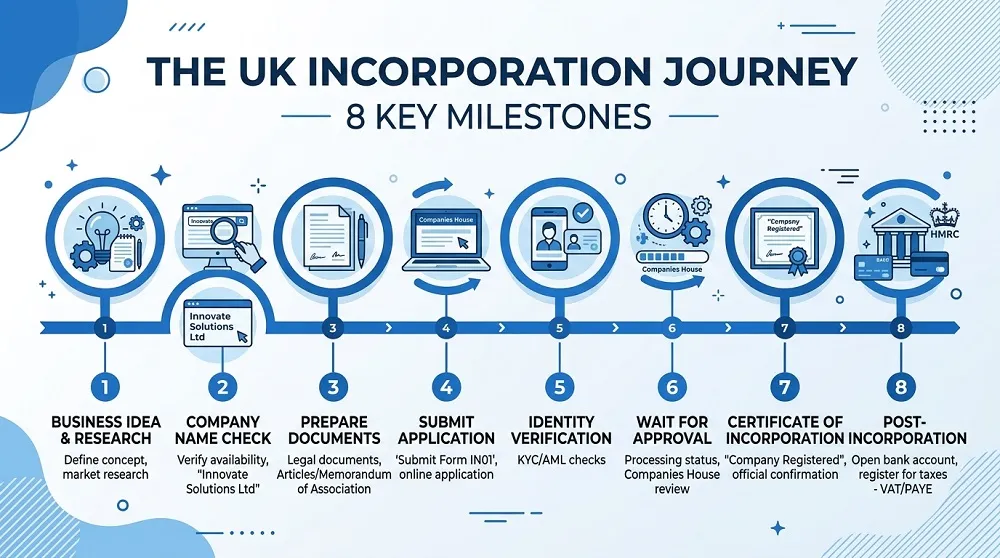
In the UK, the equivalent starting point is often the government-backed Start Up Loans scheme. In the US, the Small Business Administration offers several loan programs, including 7(a) loans for general business needs, 504 loans typically used for real estate or major equipment, and microloans for smaller funding needs. SBA-backed loans often come with more flexible terms than a standard bank loan, since the government guarantee reduces the lender’s risk.
Business Credit Cards and Lines of Credit
These work best for smaller, ongoing costs rather than large one-time purchases, since interest rates run higher than a term loan. They are useful for bridging short gaps in cash flow once you are operating.
Angel Investors and Venture Capital
Angel investors are individuals who invest their own money in exchange for equity, often at the earliest stages. Venture capitalists invest larger sums, usually in businesses with high growth potential, and typically take an active role in how the company is run afterward. This path suits a small minority of small businesses, mainly those built for rapid scaling rather than steady, local growth.
Grants and Crowdfunding
Grants do not need to be repaid, which makes them attractive, though competition is often steep and applications can be lengthy. UK founders can review our guide to grants for small businesses in the UK for current schemes. Crowdfunding, including pre-order campaigns for a physical product, lets you raise money while also testing whether real customers want what you are building.
Friends, Family, and Alternative Funding Sources
Loans or investments from people you know come with fewer formal requirements but carry their own risk to personal relationships if the business struggles. Some entrepreneurs also use a Rollover for Business Startups, which funds a business using retirement account money without an early withdrawal penalty, though this carries real risk to retirement savings and is worth discussing with a financial advisor first.
Common Mistakes When Estimating Startup Costs
Even careful planners fall into a few predictable traps.
Forgetting Ongoing Costs During the Pre-Revenue Period
The most common mistake is budgeting only for the costs needed to open the doors, then being surprised by the bills that keep arriving every month afterward while sales are still building.
Underestimating Employee Costs
As covered earlier, an employee costs roughly 1.25 to 1.4 times their salary once taxes and benefits are included. Budgeting only the salary figure leaves a meaningful gap.
Skipping the Contingency Fund
Without a buffer, a single unexpected expense, like equipment breaking down in month two, can put the entire business at risk before it has had a real chance to find its footing.
Using Guesses Instead of Real Quotes
Round numbers and mental estimates feel efficient, but the gap between an estimated $400 monthly insurance cost and an actual $1,100 premium can derail a tight budget fast. Getting real quotes early, even before you are ready to commit, protects your plan from this kind of surprise.
Not Budgeting for Your Own Living Expenses
If you plan to work in the business full-time without an outside income, your personal living expenses need a place in the plan too. Operating without any personal income is only sustainable for a limited stretch, and skipping this line item often leads to founders quietly draining personal savings outside the official budget.
How to Reduce Your Startup Costs Without Cutting Corners
Lowering your startup costs does not have to mean lowering your standards.
Lean Startup Strategies
Focus your earliest spending only on what directly serves your first customers. A simpler product or service that you can actually deliver well beats a more ambitious version you cannot yet afford to support properly.
Outsourcing vs. Hiring Early On
Hiring contractors or freelancers for specific tasks, rather than full-time staff, lets you access the skills you need without the higher cost multiplier that comes with employees. This works especially well for one-off needs like a logo design or a specific piece of legal paperwork.
Using Free or Low-Cost Tools and Software
Many software categories, from accounting to design to email marketing, offer free tiers or trials that genuinely work for a small, early-stage business. Upgrading later, once revenue justifies it, is usually easier than overspending upfront on tools you are not ready to fully use.
Buying Used Equipment or Leasing Instead of Buying
Used equipment, especially for office furniture or certain machinery, can cut this cost category significantly. Leasing rather than buying larger equipment also frees up cash for other priorities, even though it can cost more over a long time horizon.
Starting From Home or a Co-Working Space
Skipping a dedicated office or storefront in your earliest months, in favor of working from home or a shared co-working space, removes one of the highest fixed costs many businesses carry. About half of small businesses in the United States are home-based, which shows just how viable this approach is, not just a short-term compromise.
Frequently Asked Questions
How much does it cost to start a small business?
It depends heavily on your business model. Lean service businesses can start for as little as $500 to $10,000, while product-based businesses often run $5,000 to $50,000 or more, and brick-and-mortar businesses commonly need $50,000 to several hundred thousand dollars depending on the industry.
What is the difference between startup costs and operating costs?
Startup costs are the expenses you take on before and during your launch, like registration fees and your first equipment purchase. Operating costs are the ongoing expenses needed to run the business afterward, like rent, payroll, and subscriptions. Many ongoing costs need to be budgeted into your startup plan too, since you will be paying them before revenue catches up.
Can I deduct startup costs on my taxes?
Yes, generally up to $5,000 in startup costs and another $5,000 in organizational costs in your first year, though this deduction phases out once your total costs exceed $50,000. Talk to an accountant to apply this correctly to your situation.
What is the cheapest type of business to start?
Service-based businesses with low equipment needs tend to be the cheapest, including cleaning, lawn care, pressure washing, dog walking, and consulting, many of which can launch for under $10,000.
How much money should I save before starting a business?
A common guideline is to save your full estimated startup costs plus three to six months of operating expenses as a buffer, beyond your initial contingency reserve.
How long does it take for a small business to become profitable?
Survey data suggests it typically takes a year or more. Around 15 percent of business owners report turning a profit within their first year, while about 40 percent reach profitability within their first two years.
What costs do new business owners forget to budget for?
The most commonly missed items are the full cost of employees beyond their salary, several months of ongoing expenses during the pre-revenue period, a contingency fund for unexpected costs, and the owner’s own personal living expenses.
Can I start a business with no money?
Truly zero-cost businesses are rare, but very low-cost options exist, such as freelancing or certain digital products, which can sometimes launch with just a laptop and free software tools. Even then, budgeting for basic registration and insurance is worth doing early.
Key Takeaways: Your Startup Cost Planning Checklist
Getting your startup costs right comes down to a process, not a guess. List every expense you can think of, separate one-time costs from ongoing ones, estimate realistically how many months you need until break-even, and add a contingency reserve of 10 to 20 percent on top of everything. Use the formula, one-time costs plus monthly ongoing costs multiplied by your months to break-even, plus your contingency reserve, to land on one clear number.
From there, match that number to a funding source that fits your situation, whether that is personal savings, an SBA loan, or outside investment, and keep your accountant in the loop early so you do not miss the tax deductions available to you. A realistic, well-researched estimate will not just help you raise money. It will help you avoid becoming part of the large percentage of businesses that fail simply because they ran out of cash before they had the chance to succeed.