VAT Registration UK: When and How to Register With HMRC in 2026
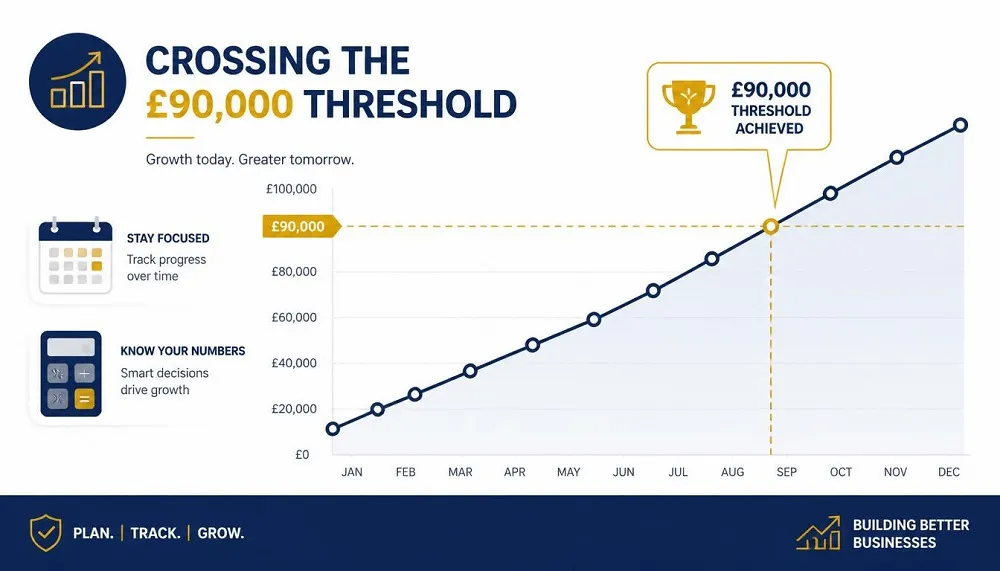
If your business turnover is creeping towards £90,000, VAT registration probably feels like a looming deadline rather than a clear process. The good news is that the rules are more straightforward than HMRC’s official wording suggests. This guide walks through exactly when you must register, how the threshold is actually calculated, and what to expect once you’re VAT registered.
Quick Answer
When do you need to register for VAT in the UK?
You must register for VAT if your taxable turnover exceeds £90,000 in any rolling 12-month period or if you expect to exceed that amount within the next 30 days. Businesses below the threshold can also choose to register voluntarily.
What VAT Registration Actually Means
VAT registration is the process of telling HMRC that your business needs to start charging Value Added Tax on the goods or services you sell. Once you’re registered, you add VAT to your invoices, collect it from customers on HMRC’s behalf, and reclaim VAT you’ve paid on business purchases.
This isn’t optional once your turnover crosses the threshold. For UK-established businesses, VAT registration is mandatory once taxable turnover exceeds £90,000 in any rolling 12-month period. Below that figure, registration is a choice rather than a requirement, which is where voluntary registration comes in (more on that shortly).
Many business owners assume VAT only applies once they’re a “proper” company. That’s a myth. Sole traders, partnerships, and limited companies all follow the same VAT registration rules. If you’re still deciding on your legal structure, read our guide to Sole Trader vs Limited Company UK before registering your business. What matters is your taxable turnover, not your legal structure.
| Compulsory Registration | Voluntary Registration |
|---|---|
| Required by law | Optional |
| Threshold exceeded | Below threshold |
| Must charge VAT | Choose whether to charge VAT |
| Must file returns | Must file returns |
The UK VAT Registration Threshold in 2026
From 1 April 2026, the registration threshold remains at £90,000, and the deregistration threshold remains £88,000. This has been unchanged since 1 April 2024, when it increased from £85,000.
It’s worth knowing this isn’t a figure HMRC simply picked at random. Following the 2025 Budget, the government noted that the UK’s threshold is higher than any EU country and the joint highest in the OECD, which means most small UK businesses never actually need to register.
How HMRC Calculates Your Rolling 12-Month Turnover
This trips more people up than almost anything else in the VAT system. The threshold isn’t based on your tax year, your accounting year, or the calendar year. It’s calculated on a rolling basis, which means you could breach the threshold in July, October, or any month, not just at year-end.
In practice, this means checking your total taxable turnover for the past 12 months at the end of every single month, not just once a year when you do your accounts. If you only check annually, you risk missing the point at which you crossed the line months earlier.
A Worked Example
Imagine you run a small design studio. On 15 July, your total taxable turnover for the previous 12 months reaches £100,000 for the first time. Because this is the first time you’ve gone over the threshold, you have a clear deadline. You must register by 30 August, and your effective date of registration becomes 1 September.
That 30-day window starts from the end of the month in which you crossed the threshold, not from the exact day you crossed it. Get into the habit of running this check monthly, and you’ll never be caught off guard.
Who Must Register for VAT?
Whether you must register for VAT depends on the nature of your business activities and your taxable turnover rather than the type of business you operate. Sole traders, partnerships, limited companies, charities carrying out taxable business activities, and overseas businesses selling taxable goods or services in the UK may all have VAT registration obligations. If your taxable turnover exceeds the registration threshold, registration becomes mandatory regardless of whether you operate from home, work as a freelancer, or run an established company. Businesses whose supplies are entirely VAT exempt generally do not need to register, although there are limited exceptions depending on the type of activities they carry out.
What Counts as Taxable Turnover
Knowing what to include in your £90,000 calculation is just as important as knowing the figure itself.
Standard, Reduced and Zero-Rated Sales
Taxable turnover includes all sales of goods and services that are subject to VAT, excluding VAT-exempt and out-of-scope supplies. That includes sales taxed at the standard 20% rate, the reduced 5% rate, and crucially, the 0% zero rate too.
This last point catches a lot of business owners out. Zero-rated sales, such as books and children’s clothing, are still taxable at 0%, which means they count towards your £90,000 threshold even though no VAT is actually charged on them.

What’s Excluded
You don’t need to register if all your sales are VAT-exempt, such as insurance, finance, or education services. These exempt categories sit outside the VAT system entirely and don’t contribute to your turnover calculation.
If you sell a mix of taxable and exempt goods or services, only the taxable portion counts towards your threshold. This is a useful distinction to get right early, since miscalculating it either way creates problems: either an unexpected late registration, or registering when you didn’t actually need to.
The Forward-Look Test: Registering Before You Hit the Threshold
Most business owners know about the rolling 12-month look-back rule. Fewer realise there’s a second, completely separate test that can apply even to businesses well below the threshold.
You must also register if you have reasonable grounds to believe that your taxable turnover will exceed £90,000 in the next 30 days alone, and this applies even if your historic turnover is well below the threshold.
This matters most for businesses that land a single large contract. Say you arrange a £100,000 contract on 1 May, to be paid at the end of the month. You’d need to submit your VAT registration application by 30 May, with an effective registration date of 1 May.
The trigger here isn’t when the money lands in your account. It’s the moment you have reasonable grounds to believe your taxable supplies will exceed the threshold in the coming 30 days. If you’re negotiating a contract that size, it’s worth getting VAT advice before you sign rather than after.
Should You Register for VAT Voluntarily?
You don’t have to wait until you’re forced to register. Plenty of small businesses choose to register early, and for some, it’s a genuinely smart move.
When Voluntary Registration Makes Sense
Businesses below the threshold can register voluntarily to reclaim VAT on startup costs, up to four years for goods and six months for services, and to gain credibility with B2B clients.
If most of your customers are themselves VAT-registered businesses, voluntary registration often works in your favour. They can reclaim the VAT you charge, so adding VAT to your invoices doesn’t actually increase their real cost, while you get to reclaim VAT on your own business expenses. This is particularly common among consultants, agencies, and B2B service providers with significant equipment or software costs.
When It’s Better to Wait
If your customers are mostly individual consumers rather than VAT-registered businesses, the calculation flips. Adding 20% to your prices either eats into your margin or makes you less competitive against unregistered rivals, since your customers can’t reclaim that VAT themselves.
There’s also an administrative cost to weigh up. Once registered, you’re committed to quarterly VAT returns, digital record-keeping, and ongoing compliance, regardless of how small your turnover stays. For a very early-stage business with limited admin capacity, that overhead can outweigh the benefits.
| Situation | Should You Register? | Reason |
|---|---|---|
| Turnover above £90,000 | Yes | Required by HMRC |
| Turnover below £90,000 with mostly business customers | Usually Yes | Customers can reclaim VAT |
| Turnover below £90,000 with mostly consumers | Usually No | VAT increases customer prices |
| Startup with significant setup costs | Often Yes | Can reclaim VAT on eligible purchases |
| Business providing only VAT-exempt services | Usually No | Registration often isn’t required |
How to Register for VAT: Step by Step
What You’ll Need Before You Start
You’ll need your National Insurance number or unique taxpayer reference, along with details of your business activities and bank account information to complete your registration. Limited companies will also need their company registration number and Companies House details to hand.
Before beginning the VAT registration process, make sure your business has already been registered with the appropriate authorities. If you have not yet completed this stage, our guide on How to Register a Business in the UK explains the complete process from choosing a business structure to registering with HMRC and Companies House.
Registering Online Through Government Gateway
Most businesses register online via their Government Gateway account. A completed VAT registration application is submitted online to HMRC, along with legal entity details, bank account information, and a description of your business activities and expected taxable turnover.
If you’re registering your business with HMRC for the first time, you may also need to set up your online tax services. Our guide to the HMRC Business Tax Account explains how to create and manage your account.
Paper forms are only available in limited cases, such as certain exemption situations or where HMRC cannot register you online. For the vast majority of small businesses, the online route is faster and the only practical option.
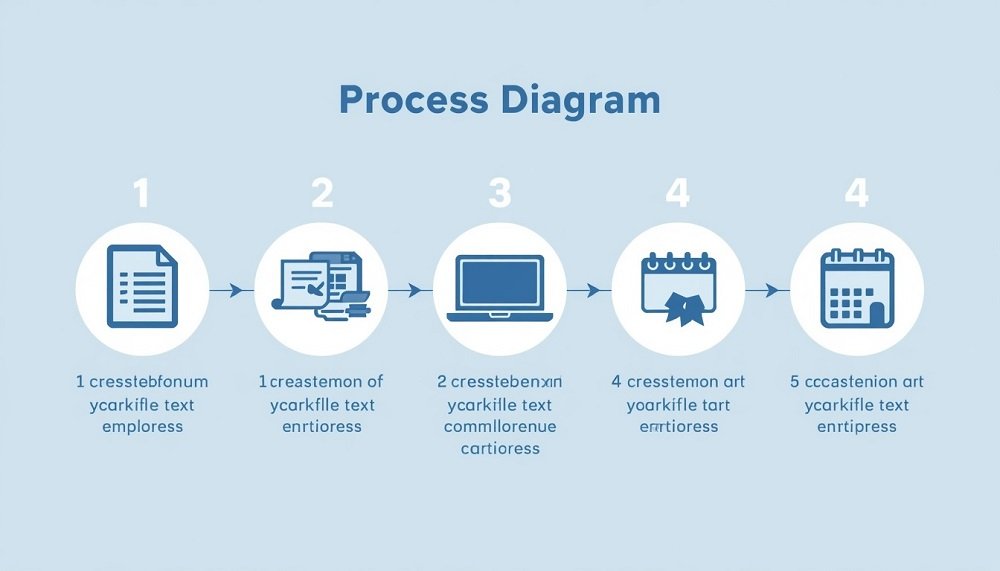
Once submitted, you wait for confirmation. HMRC usually issues your VAT registration certificate within 30 working days, although it can sometimes take longer.
What Happens After You Register
Charging VAT Before Your Number Arrives
This is one of the most common sources of confusion. Your effective date of registration is set the moment you apply, not the day your certificate finally arrives. That means you may need to start accounting for VAT on sales before you’ve actually been issued a VAT number, which can mean adjusting invoices retrospectively once the number comes through.
From your effective registration date, you must add VAT to all applicable sales at the correct VAT rate. Keep clear records of any sales made in this gap period so you can correct your invoices properly.
Making Tax Digital and Your First VAT Return
All VAT-registered businesses must keep digital records and submit VAT returns using MTD-compatible software from their very first return, whether they registered voluntarily or compulsorily.
Most businesses file quarterly VAT returns, and for a quarter ending 31 March, the return and payment is typically due by 7 May. Mark these deadlines clearly in your calendar from day one. Late returns trigger automatic penalties, so it’s worth building this rhythm into your bookkeeping immediately rather than treating it as an afterthought.
Late VAT Registration: Penalties and How to Fix It
If you’ve already missed your registration deadline, the priority is dealing with it quickly rather than hoping HMRC won’t notice.
Missing the registration deadline happens more often than people expect, and it brings backdated VAT bills, penalty charges, and administrative headaches that could have been avoided. You’ll still owe the VAT you should have charged from your correct registration date, even if you didn’t actually charge customers for it at the time.
The penalty itself scales with how late you are. HMRC charges penalties based on how late you register and how much VAT you owe, with the most severe cases reaching up to 15% of the VAT due.
If you realise you’re overdue, contact HMRC immediately with a voluntary disclosure, since early disclosure demonstrates good faith and HMRC may reduce penalties based on your circumstances, including whether you disclosed voluntarily and your compliance history. Acting fast genuinely matters here.
Choosing a VAT Scheme Once You’re Registered
Standard VAT accounting isn’t your only option. The flat rate scheme lets eligible small businesses pay VAT as a fixed percentage of turnover rather than tracking VAT on every individual purchase, which can simplify bookkeeping considerably for businesses with relatively few expenses.
There are also cash accounting and annual accounting schemes, each suited to different cash flow patterns. It’s worth reviewing which scheme fits your business model at the point of registration rather than defaulting to standard accounting and switching later, since changing schemes involves its own paperwork.
Selecting the right VAT accounting scheme can have a noticeable impact on your cash flow and administrative workload. While many businesses automatically use the standard VAT accounting scheme, smaller businesses may benefit from alternatives such as the Flat Rate Scheme, Cash Accounting Scheme, or Annual Accounting Scheme. Each option has different eligibility requirements and reporting rules. Choosing the most suitable scheme depends on factors such as turnover, the types of customers you serve, and how frequently you purchase goods and services. Reviewing your options before registration can save both time and money over the long term.
Documents You’ll Need Before Registering for VAT
Preparing your documents before starting the online application can make the registration process much smoother. Most businesses will need their Government Gateway credentials, Unique Taxpayer Reference (UTR), National Insurance number (for sole traders), business bank account details, Companies House registration number (for limited companies), a description of business activities, expected taxable turnover, and the date trading began. Having this information ready reduces delays and helps ensure your application is completed accurately.
| Document | Required For |
|---|---|
| Government Gateway Account | Online application |
| UTR | Tax identification |
| Company Registration Number | Limited companies |
| Business Bank Account | VAT repayments |
| Trading Start Date | Registration assessment |
| Estimated Turnover | Threshold calculation |
Deregistering From VAT
VAT registration isn’t necessarily permanent. Businesses may cancel their VAT registration if their annual turnover falls below the deregistration threshold, currently set at £88,000.
This £88,000 figure sits deliberately below the £90,000 registration threshold, creating a buffer zone that stops businesses bouncing in and out of VAT registration every time turnover fluctuates slightly. If your turnover has genuinely and sustainably dropped, deregistering removes the quarterly filing burden, though it also means you can no longer reclaim VAT on purchases.
Common VAT Registration Mistakes Small Businesses Make
A few errors come up again and again among small businesses navigating registration for the first time:
- Checking turnover annually instead of monthly, which means missing the exact month the threshold was crossed
- Forgetting that zero-rated sales still count towards the £90,000 limit
- Assuming the forward-look test only applies to businesses already close to the threshold
- Not keeping records during the gap between the effective registration date and receiving the VAT number
- Treating MTD software as optional rather than mandatory from the very first return
| Mistake | Why It Causes Problems |
|---|---|
| Monitoring turnover once a year | Late registration |
| Forgetting zero-rated sales | Incorrect turnover calculation |
| Missing the forward-look test | Unexpected penalties |
| Delaying registration | Backdated VAT liabilities |
| Poor digital record keeping | MTD compliance issues |
VAT Registration Checklist
- Check your rolling 12-month taxable turnover every month.
- Decide whether registration is compulsory or voluntary.
- Gather all required business documents.
- Create or access your Government Gateway account.
- Submit your VAT registration application.
- Wait for your VAT registration certificate.
- Start charging VAT from your effective registration date.
- Keep digital VAT records.
- Use Making Tax Digital compatible software.
- Submit your first VAT Return on time.
Frequently Asked Questions
How long does VAT registration take?
HMRC typically processes VAT registration applications within 10 working days, though issuing the actual registration certificate can take up to 30 working days.
Do I need an accountant to register for VAT?
No, registration can be completed independently through your Government Gateway account. That said, an accountant can be valuable if your situation involves the forward-look test, partial exemption, or a large one-off contract, where getting the effective date wrong has real financial consequences.
Can I register for VAT as a sole trader?
Yes. VAT registration applies based on turnover, not business structure, so sole traders, partnerships, and limited companies all follow the same threshold rules.
What if my turnover drops after registering?
You can apply to deregister once your turnover falls below the £88,000 deregistration threshold, provided the drop looks sustainable rather than temporary.
Can I register for VAT before I start trading?
Yes. HMRC allows businesses to register for VAT before they begin trading if they expect to make taxable supplies in the future. Early registration can also allow eligible businesses to reclaim VAT on certain pre-registration expenses, subject to HMRC’s rules.
Can I cancel my VAT registration?
Yes. If your taxable turnover falls below the VAT deregistration threshold and you no longer expect it to exceed the registration threshold, you can apply to cancel your VAT registration with HMRC. Once deregistered, you will stop charging VAT and submitting VAT returns, although certain final reporting obligations may still apply.
Conclusion
VAT registration in the UK hinges on one number, £90,000, but the surrounding rules are where most businesses trip up. Check your rolling 12-month turnover monthly, not annually. Remember that zero-rated sales still count even though no VAT is charged on them. Watch for the forward-look test if you’re about to land a large contract. And if you do miss a deadline, act fast and disclose voluntarily rather than waiting for HMRC to find you.
Getting VAT registration right from day one sets up everything that follows, your invoicing, your pricing, and your quarterly admin, far more smoothly than trying to fix it retrospectively.
For more on the broader process of setting up a UK business, including choosing a legal structure and registering with Companies House, see our step-by-step guide to registering a business in the UK.
Sarah Whitfield is a UK-based accountant and small business writer with nine years of experience advising sole traders and limited companies on tax compliance, including VAT registration and Making Tax Digital transitions.