

A bad credit score can make borrowing feel out of reach, but it rarely closes every door. UK lenders increasingly look past a single number and weigh trading performance, cash flow and repayment ability alongside credit history. This guide explains what counts as bad credit for a business, which loan types are realistically available, how a County Court Judgment affects your options, and what you can do right now to improve your chances of approval.
Key takeaways
- Getting a business loan with bad credit in the UK is possible, though your choice of lender narrows and the cost of borrowing usually rises.
- Checking your own eligibility through a soft search does not affect your credit score. Only a full application triggers a hard search.
- A County Court Judgment does not automatically rule you out, particularly if it is older or has been satisfied.
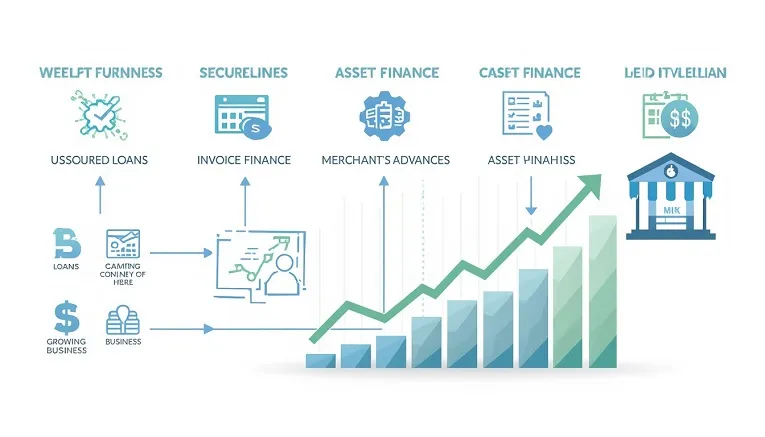
- Specialist lenders, secured loans, merchant cash advances, invoice finance and asset finance are the main routes when a high street bank says no.
- Borrowing a smaller amount, offering security, and correcting errors on your credit file before applying all improve your odds.
What Counts as Bad Credit for a UK Business?
Lenders use the term loosely, but in practice a business is treated as bad credit when its credit reference agency score sits in a below-average or high-risk band, or when specific red flags appear on file regardless of the overall score.
Business Credit Score vs Personal Credit in Loan Decisions
Your business credit score reflects how your company has managed payments, filings and public records. For sole traders and partnerships, lenders typically rely on personal credit history instead, since there is no separate legal entity. Limited company directors sit somewhere in between: the company has its own score, but a director’s personal credit can still matter, especially if a personal guarantee is requested. If you are not sure where your score currently stands or how it is calculated, our guide to business credit score UK explains the full picture, including how to check it for free and what pulls it down.
Common Causes of a “Bad Credit” Label
- Late or missed payments to suppliers, lenders or HMRC
- High credit utilisation relative to available limits
- A County Court Judgment, whether satisfied or not
- Late filing of accounts or confirmation statements at Companies House
- A thin credit file, common in businesses trading for under two years
- Several credit applications made in a short space of time
None of these are permanent. Most reflect a period of financial pressure rather than a fixed judgement on your business.
Although payment history is one of the biggest factors, lenders also review the overall financial health of the business. Irregular cash flow, declining revenue, repeated overdraft usage, outstanding tax liabilities, or significant borrowing compared with turnover may all influence lending decisions. Understanding these wider financial indicators allows business owners to address weaknesses before applying for finance rather than focusing only on their credit score.
Can You Check Your Business Credit Score Before Applying?
Many business owners worry that checking their credit score could reduce their chances of getting approved for finance. Fortunately, checking your own business credit report is considered a soft enquiry and does not affect your credit score. Before applying for any finance, it is worth reviewing your reports with the major UK credit reference agencies, correcting any inaccurate information, and ensuring all recent payments have been recorded correctly. Knowing your score in advance also helps you target lenders whose eligibility criteria better match your financial profile instead of submitting unnecessary applications.
Is It Possible to Get a Business Loan With Bad Credit in the UK?
Featured answer: Yes. While mainstream banks tend to decline applications from businesses with poor credit, a broad range of specialist and alternative lenders in the UK will still consider funding based on turnover, trading history and affordability rather than credit score alone. Expect a smaller loan pool, higher interest rates, and in many cases a request for security or a personal guarantee.
Does Applying Affect Your Credit Score? Soft Search vs Hard Search Explained
This is one of the most common worries business owners raise, and it has a clear answer.
Featured answer: Checking your eligibility or comparing lenders through a soft search does not affect your credit score, because it leaves no visible mark on your file that other lenders can see. A hard search only happens once you formally submit a full loan application, and it does leave a record. Several hard searches in a short period can make your business look financially stretched, which is why it pays to use eligibility checkers before committing to a full application.
How to Compare Lenders Without Damaging Your File
Most specialist lenders and broker platforms now offer a soft-search eligibility check before you apply. Use this stage to narrow down which lenders are likely to approve you, and only proceed to a full hard-search application with the one or two options that look strongest. Spacing out any hard-search applications by several weeks, rather than applying to five lenders in one afternoon, also protects your score.
Types of Business Loans Available With Bad Credit
Lenders that work with weaker credit histories tend to offer a narrower but still useful range of products.
| Loan type | Speed | Typical cost | Security required | Best for |
|---|---|---|---|---|
| Unsecured business loan | Days to 1-2 weeks | Higher interest, no fixed rate | Usually none, though a personal guarantee is common | Smaller amounts, quick access |
| Secured business loan | 1-3 weeks | Lower interest than unsecured | Property, equipment or other business assets | Larger amounts, longer terms |
| Merchant cash advance | Days | Factor rate rather than APR, often higher overall cost | None, repayment taken from card sales | Businesses with strong card takings |
| Invoice finance | Days to 1 week | Fee based on invoice value | Unpaid invoices act as security | Businesses waiting on customer payments |
| Asset finance | 1-2 weeks | Moderate, tied to asset value | The asset being financed | Buying equipment or vehicles |
| Guarantor loan | 1-2 weeks | Lower than unsecured bad credit rates | A third party’s guarantee, not business assets | Businesses with a willing, creditworthy guarantor |
Unsecured Business Loans
These remain available with bad credit, though lenders compensate for risk with higher rates and smaller maximum amounts. A personal guarantee from a director is often requested even where no other security is needed.
Secured Business Loans
Offering an asset, whether property, equipment or vehicles, as security tends to open access to larger amounts and comparatively lower rates, since the lender’s risk is reduced. The trade-off is that the asset can be repossessed if repayments are missed.
Merchant Cash Advances
A merchant cash advance provides a lump sum repaid automatically as a percentage of daily card sales. Because approval leans heavily on sales volume rather than credit history, this route often suits retail and hospitality businesses with weaker credit but strong, consistent card takings.
Invoice Finance
If your business is owed money on unpaid invoices, invoice finance lets you borrow against that value rather than waiting 30, 60 or 90 days for customers to pay. The invoices themselves act as the security, which makes this option accessible even with a damaged credit file.
Asset Finance
Asset finance funds the purchase of equipment, machinery or vehicles, with the asset itself serving as collateral. Because the lender can recover the asset if payments stop, approval criteria are often more flexible than for a general unsecured loan.
Guarantor Loans
A guarantor loan involves a third party, often a director or business partner with a stronger credit history, agreeing to cover repayments if your business cannot. This can unlock better rates than a standard bad credit loan, but it places real financial risk on the guarantor and should be discussed openly before proceeding.
| Loan Type | Credit Requirement | Typical Amount | Suitable For |
|---|---|---|---|
| Unsecured Loan | Medium | £5,000 to £250,000 | Established SMEs |
| Secured Loan | Poor to Fair | £25,000+ | Businesses with assets |
| Invoice Finance | Flexible | Based on invoices | Cash flow |
| Merchant Cash Advance | Flexible | Based on card sales | Retail & Hospitality |
| Asset Finance | Flexible | Asset value | Equipment purchase |
| Start Up Loan | Fair | Up to £25,000 | New businesses |
Can I Get a Business Loan With a CCJ?
A County Court Judgment is one of the most common reasons businesses assume they have no options left, but it is rarely an automatic block.
How Lenders View Old vs Recent CCJs
Lenders generally treat a CCJ from several years ago with more leniency than one registered in the last twelve months, particularly if your more recent payment history looks stable. A single, small CCJ is also viewed differently from multiple judgments or a large outstanding amount.
Satisfied vs Unsatisfied CCJs, Why It Matters
A satisfied CCJ, meaning the debt has been paid in full, signals that the issue has been resolved and tends to weigh less heavily on a lender’s decision. An unsatisfied CCJ, where the debt remains outstanding, is a stronger red flag and may need to be settled or a repayment plan agreed before some lenders will consider an application. If you believe a CCJ on your file is inaccurate or out of date, it is worth raising a dispute with the relevant court and credit reference agency before you apply, since correcting the record can materially change your options.
Government-Backed and Alternative Lending Routes
Beyond specialist commercial lenders, several UK schemes exist specifically to support businesses that mainstream banks turn away.
Start Up Loans Scheme
The government-backed Start Up Loans programme offers unsecured personal loans of between £500 and £25,000 at a fixed rate of 6% per year, aimed at new and early-stage businesses. Because the assessment weighs your business plan alongside your credit history, it can be a realistic route even where a standard commercial loan has been declined. Our guide to start up loans UK covers eligibility and the application process in full.
Community Development Finance Institutions
Community Development Finance Institutions, or CDFIs, are not-for-profit lenders that specifically support businesses in underserved areas or with limited access to mainstream finance. They tend to look closely at the viability of the business itself rather than relying purely on a credit score.
Credit Unions
Some credit unions offer business lending to members, often at more affordable rates than commercial bad credit lenders, though eligibility usually depends on your business or personal connection to that particular union.
Business Loan Eligibility With Bad Credit: What Lenders Actually Look At
Specialist lenders tend to weigh a wider set of factors than a high street bank, which relies heavily on credit score alone.
Trading History and Turnover Requirements
| Lender type | Typical minimum trading history | Typical turnover requirement |
|---|---|---|
| High street bank | 2+ years | Higher, varies by product |
| Specialist bad credit lender | 6-12 months | Often a minimum monthly turnover figure |
| Merchant cash advance provider | 4-6 months, card sales based | Consistent card takings required |
| Start Up Loans scheme | Pre-trading or early stage accepted | Business plan based, not turnover based |
Affordability Over Credit History
Rather than treating a low score as a hard stop, many specialist lenders assess whether current cash flow genuinely supports the proposed repayments. Recent bank statements, management accounts and a clear explanation of what the funding will be used for all strengthen an application, since they demonstrate affordability even where historical credit data looks weak.
Why Lenders Sometimes Decline Applications
Receiving a rejection does not necessarily mean your business is unfinanceable. Applications may be declined because of insufficient trading history, unstable cash flow, outstanding tax liabilities, excessive existing borrowing, or incomplete documentation rather than credit score alone. Asking the lender for feedback allows you to address specific issues before submitting another application and avoids repeating the same mistakes with future lenders.
Business Structure Matters: Sole Trader vs Limited Company
How your business is structured changes both what lenders assess and how bad credit affects your application.
| Structure | Whose credit is assessed | Personal guarantee likely? | Typical lender approach |
|---|---|---|---|
| Sole trader | Your personal credit history | Not applicable, business and personal finances are legally the same | Personal credit and trading income both reviewed |
| Partnership | Each partner’s personal credit | Sometimes, from one or more partners | Joint liability considered |
| Limited company | The company’s own credit file | Often, particularly for newer or smaller companies | Company score reviewed, director guarantee frequently requested |
Sole traders with a personal credit issue may find it harder to separate that history from their business borrowing, since no legal distinction exists. Limited company directors, by contrast, can sometimes access finance even with a weaker personal score if the company’s own trading and credit position is stronger, though a personal guarantee often bridges that gap. For a fuller comparison of how business structure affects your finances more broadly, see our guide to business structures in the UK.
What a Bad Credit Business Loan Actually Costs
The clearest way to understand the cost of bad credit lending is to compare it directly against a standard rate.
Worked Example: Clean Credit vs Bad Credit APR Comparison
Imagine two businesses each borrowing £30,000 over three years. A business with clean credit might be offered a rate of around 11% APR, giving a monthly repayment near £980. A business with a damaged credit history, borrowing the same amount over the same term, might instead be offered around 24% APR, lifting the monthly repayment to roughly £1,180. Over three years, that difference adds several thousand pounds to the total cost of borrowing. It is a real premium, but for many businesses it represents the price of access when a cheaper lender would otherwise decline the application outright.
| Credit Profile | Example APR | Monthly Repayment | Total Cost |
|---|---|---|---|
| Excellent | 9% | £955 | Lower |
| Good | 12% | £995 | Moderate |
| Fair | 17% | £1,080 | Higher |
| Poor | 24% | £1,180 | Highest |
How to Improve Your Chances of Approval
Reduce the Amount You’re Borrowing
Lenders take on less risk with a smaller loan, which means bad credit applicants are often approved more easily, and at a better rate, when they ask for only what they genuinely need rather than the maximum available.
Prepare a Clear Business Plan and Financials
A well-prepared business plan, recent bank statements and up-to-date management accounts give a lender concrete evidence of affordability, which can offset a weaker credit score in their overall assessment.
Offer Security or a Personal Guarantee
Providing an asset as security, or agreeing to a personal guarantee, reduces the lender’s risk and can open access to better terms. It is worth weighing this decision carefully, since it ties personal or business assets directly to the loan.
Correct Errors on Your Credit File Before Applying
Outdated addresses, payments wrongly marked as late, or records belonging to a different company are more common than many business owners expect. Requesting your full credit report and correcting any inaccuracies before you apply can genuinely change the outcome of an application.
What If You’re Declined?
Next Steps After Rejection
A single rejection does not mean the door is fully closed. Review the specific reason given, since lenders are generally required to explain why an application was refused, and use that information to address the underlying issue before approaching a different lender. Avoid applying to several lenders in quick succession, as each hard search adds to the pattern a future lender will see.
Alternatives to a Loan
If borrowing continues to feel out of reach, it is worth exploring non-debt or lower-commitment options in the meantime. A business overdraft can smooth short-term cash flow gaps without the same commitment as a term loan, while grants for small businesses offer funding that does not need to be repaid at all, subject to eligibility.
For some businesses, delaying borrowing for a few months while strengthening cash flow can lead to significantly better financing options. Reducing outstanding debt, improving profitability, increasing recurring revenue, and demonstrating consistent monthly income all contribute towards stronger lending decisions. In many cases, waiting six to twelve months before reapplying results in access to lower interest rates and higher borrowing limits.
Rebuilding Credit and Refinancing Later
Using a Bad Credit Loan to Build a Track Record
Taking on a smaller bad credit loan and repaying it reliably is itself a way of rebuilding your credit profile. Consistent, on-time repayments over several months to a year can materially improve your standing, opening the door to refinancing at a lower rate once your credit position strengthens. Understanding how your day-to-day working capital is managed alongside any new borrowing also helps ensure repayments stay sustainable rather than adding further strain.
Business Loan Bad Credit FAQs
Can you get a business loan with bad credit in the UK?
Yes. While high street banks typically decline applications from businesses with poor credit, specialist and alternative lenders assess a wider range of factors, including turnover and trading history, and will often still consider funding.
Can I get a business loan with a CCJ?
It depends on the age, size and status of the judgment. An older, satisfied CCJ is viewed far more favourably than a recent, unsatisfied one, and many specialist lenders will still consider an application in either case.
Does applying for a bad credit business loan affect my credit score?
A soft-search eligibility check does not affect your score. A full application triggers a hard search, which is recorded on your file, so it is worth using soft searches to narrow down lenders before applying formally.
What’s the easiest business loan to get with bad credit?
A merchant cash advance is often the most accessible option for businesses with strong, consistent card sales, since approval focuses on trading income rather than credit history.
Do lenders check my personal credit as well as my business credit?
For sole traders and partnerships, personal credit is usually the primary factor. For limited companies, the company’s own credit file is assessed, though a director’s personal credit may still be reviewed if a personal guarantee is involved.
How much can I borrow with bad credit?
This varies significantly by lender and loan type, but bad credit lenders typically offer smaller amounts than mainstream banks, often starting from a few thousand pounds and scaling with turnover, trading history and security offered.
Can I get a business loan without a personal guarantee?
Some lenders offer unsecured business loans without requiring a personal guarantee, particularly for established businesses with strong financial performance. However, companies with poor credit are more likely to be asked for a director’s personal guarantee to reduce lender risk.
What credit score do I need for a business loan in the UK?
There is no universal minimum credit score for business finance. Every lender uses its own criteria alongside factors such as turnover, trading history, profitability, affordability, and available security.
Can a new business get funding with bad credit?
Yes. New businesses may still qualify for funding through government-backed Start Up Loans, Community Development Finance Institutions (CDFIs), or specialist lenders that assess the strength of the business plan alongside the applicant’s financial history.
Is a secured or unsecured loan better with bad credit?
A secured loan generally offers a lower rate and higher borrowing limit but puts an asset at risk. An unsecured loan avoids that risk but usually comes with a higher rate and lower maximum amount. The right choice depends on whether you have suitable assets and how much risk you are comfortable taking on.
Key Takeaways: Getting a Business Loan With Bad Credit
A bad credit score narrows your borrowing options in the UK, but it rarely eliminates them entirely. Specialist lenders, secured loans, merchant cash advances, invoice finance, asset finance and government-backed schemes like Start Up Loans all provide realistic routes to funding, provided you understand what each lender is really assessing. Checking your eligibility through a soft search first, correcting any errors on your credit file, and borrowing only what you genuinely need are the most reliable ways to improve your chances. Used well, even a bad credit loan can become the first step towards a stronger credit profile and better borrowing terms in future.
Written by the Businessmine editorial team, covering UK business finance, banking and compliance topics for small business owners, sole traders and company directors. Our guides are researched using primary sources including Companies House, government guidance and established UK credit reference agencies, and are reviewed for accuracy before publication.
This article is for general information only and does not constitute financial advice. Speak to a qualified financial adviser or accountant before making decisions about your business’s borrowing.