Business Bank Account Requirements in the UK: The Complete Guide
If you are about to open a business bank account in the UK, you probably have one question: what do I actually need? The answer depends on whether you are a sole trader, a limited company director, or a partner in an LLP, and whether you live in the UK or abroad.
This guide covers every requirement in plain language, based on how UK banks and regulators actually operate. You will learn what is legally required, what documents to prepare, how long approval takes, and what to do if your application gets turned down.
What Is a Business Bank Account and Who Needs One?
A business bank account is simply a bank account set up in the name of your business rather than your own name. Money in and out of the business runs through this account instead of mixing with your personal spending.
Business Bank Account vs. Personal Bank Account
The core difference is ownership and purpose. A personal account belongs to you as an individual. A business account belongs to your business or is used specifically for business transactions if you are a sole trader. Business accounts also tend to come with tools that personal accounts skip, such as invoicing features, expense categorisation, and integration with accounting software like Xero or QuickBooks.
Is a Business Bank Account a Legal Requirement in the UK?
This is where most confusion starts, so let’s be direct about it.
Limited companies and LLPs must have a business bank account. A limited company is a separate legal entity from the people who run it. Its money is not your money, even if you are the only director and shareholder. Keeping company funds in your personal account breaks this separation and can cause real problems with HMRC, Companies House, and your own limited liability protection.
Sole traders and general partnerships are not legally required to have one. You can run your business income and expenses through your personal current account. Many banks technically permit this, though some restrict business activity on personal accounts in their terms, so check with your provider first.
That said, most sole traders who skip a business account eventually regret it at tax time. Sorting business expenses from personal ones in a single account, transaction by transaction, is tedious and increases the chance of mistakes on a Self Assessment return.
Why Banks and Regulators Require This Separation
Banks are not being difficult when they ask limited companies to use a dedicated account. It comes down to legal structure. A company can sue and be sued, own assets, and owe debts independently of its directors. If company and personal money sit in the same pot, it becomes nearly impossible to prove which money belongs to whom, which matters if the company is ever investigated, audited, or wound up.
Quick summary: Limited companies and LLPs need a business bank account by law. Sole traders and general partnerships do not need one legally, but most find it makes bookkeeping, tax reporting, and looking professional to clients much easier.
Business Bank Account Eligibility Criteria in the UK
Before you fill in any application, it helps to know whether you are even likely to qualify.
Minimum Age and Residency Requirements
Every UK bank requires applicants to be at least 18 years old. Most also expect a UK address, though exact residency rules vary. Starling, for example, requires all persons of significant control to be UK residents for its standard limited company account. Other banks, including several high street banks with international divisions, will work with non-resident directors under stricter conditions, covered later in this guide.
Who Is Legally Allowed to Apply
This detail trips people up more than almost anything else. For a limited company or registered partnership, only a director or nominated partner can open the account. Your accountant cannot do it for you, even if they handle everything else for your business, and an employee such as a finance manager cannot do it either. For a general partnership, one of the partners can apply on the firm’s behalf. For a sole trader, only you can apply, since you and the business are legally the same person.
Turnover, Trading History, and Business Lifespan Criteria
Some accounts are designed specifically for businesses that have not started trading yet, often called start-up accounts. NatWest’s Start-up account, for example, is open to businesses trading for less than a year with turnover under £1 million. Other standard business accounts have upper turnover limits too. HSBC’s Small Business Banking Account is built for businesses with turnover up to £6.5 million, after which you would need to speak to their commercial banking team directly. If your business has no trading history at all, a bank may carry out a personal credit check on you instead of a business one, since there is no business credit file yet to assess.
Restricted and High-Risk Industries Banks May Decline
Certain sectors face extra scrutiny or outright rejection from many providers. Gambling, weapons manufacturing, cryptocurrency, and other high-risk financial services are commonly restricted, particularly among digital-first banks that want to keep their compliance overhead low. If your business operates in a regulated profession, such as law or estate agency, expect the bank to ask about your professional licences too.
Quick summary: You need to be 18 or over, usually UK-based, and the right person (director, partner, or sole trader) to apply. Turnover limits and industry restrictions can rule out certain accounts before you even start the paperwork.
Documents Required to Open a Business Bank Account
This is the part everyone searches for, so let’s break it down properly by category.
Proof of Identity
Every bank needs to confirm you are who you say you are. Accepted documents typically include a valid passport or a UK photocard driving licence. If you apply online, most banks let you photograph your ID and record a short selfie video or biometric scan to match your face against the document. If you apply in branch, bring the original document, not a photocopy.
Proof of Address
You will also need to prove where you live. Acceptable documents usually include a recent utility bill, a council tax bill, a mortgage statement, or a bank statement. The general rule across UK banking is that this document must be dated within the last three months, though some banks accept mortgage statements up to twelve months old. Make sure the name and address on this document match your application exactly, since even a small mismatch can delay things.
Business Registration and Legal Structure Documents
What you need here depends entirely on your business structure.
Limited companies need their certificate of incorporation, which confirms the company is registered with Companies House, along with details from the Memorandum and Articles of Association. The bank will also want to verify the company registration number and the names of all directors and anyone classed as a Person of Significant Control, meaning anyone who owns more than 25% of shares or voting rights.
Sole traders need to show evidence that they are genuinely trading, usually through their HMRC self-employment registration confirmation or a recent Self Assessment tax return.
Partnerships and LLPs need a partnership agreement if one exists, plus incorporation documents for LLPs specifically, since an LLP is similarly registered with Companies House to a limited company.
Tax and Financial Documentation
Many banks ask for your Unique Taxpayer Reference, known as a UTR, which HMRC issues when you register for Self Assessment or set up a limited company. If your business is VAT registered, you may also need to provide your VAT number. These details help the bank build a clearer picture of your tax footprint, even though they are not always strictly mandatory.
Evidence of Trading Activity
For some accounts, particularly higher-tier ones or those for established businesses, the bank may ask for evidence that the business is actually operating. This could be recent invoices, signed contracts with clients, or a written business plan and cash flow forecast if you are still pre-revenue.
Quick summary table:
| Document Type | Sole Trader | Limited Company | Partnership/LLP |
|---|---|---|---|
| Photo ID | Required | Required (all directors/PSCs) | Required (all partners) |
| Proof of address | Required | Required | Required |
| Business registration proof | Self-employment registration | Certificate of incorporation | Partnership agreement / LLP incorporation |
| UTR | Often requested | Often requested | Often requested |
| VAT details | If registered | If registered | If registered |
| Evidence of trading | Sometimes | Sometimes | Sometimes |
Requirements by Business Structure: A Closer Look
The documents above apply differently depending on your structure, so here is how each one plays out in practice.
Sole traders face the lightest checks, since there is no separate legal entity to register. You need your own ID, proof of address, and evidence that you are self-employed, such as your UTR or a recent tax return.
Limited companies face the most thorough checks, since the bank has to verify both the company and every individual with significant control over it. Expect to provide ID and proof of address for every director and PSC, not just the person filling in the application, alongside the certificate of incorporation and company registration number.
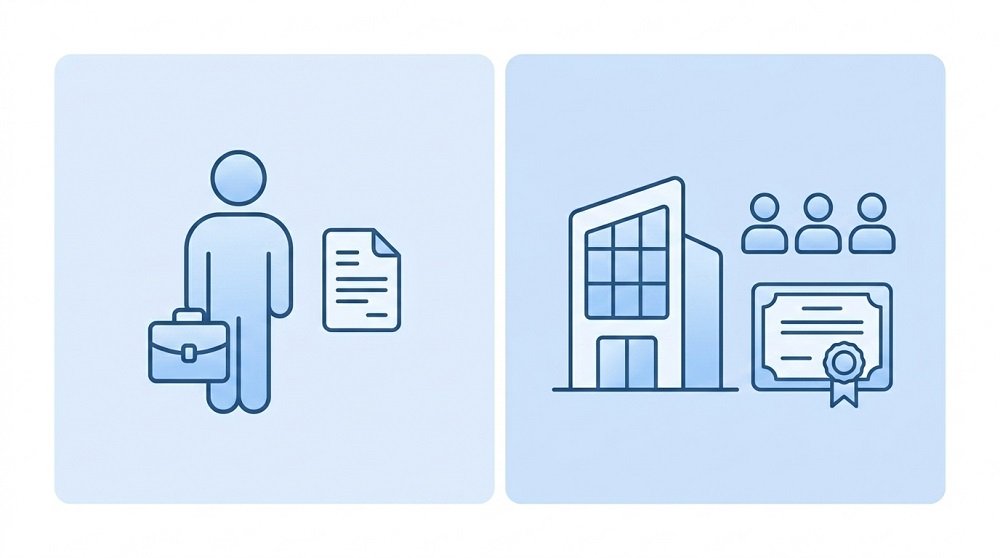
Partnerships and LLPs sit in between. General partnerships are treated much like sole traders, with each partner providing their own ID and address proof. A partnership agreement is recommended but not always compulsory. LLPs, however, must have a business bank account by law, much like limited companies, and need to show their own incorporation documents from Companies House.
Charities, clubs, and societies get overlooked in most guides, but banks do offer accounts for them. Registered charities typically need their charity registration number, a copy of their governing document such as a constitution or trust deed, and ID for the trustees who will operate the account. Community groups and sports clubs that are not formally incorporated can usually still open an account, though the bank will ask for a club constitution and details of the committee members authorised to manage the money. If your group has not yet registered as a charity, most banks will let you open the account first and update your details once registration comes through.
Why Banks Ask for These Documents: The Regulatory Basis
It is worth understanding the “why” behind all this paperwork, because it explains why banks are so strict and consistent about it.
The Money Laundering Regulations 2017
UK banks operate under the Money Laundering Regulations 2017, a legal framework requiring financial institutions to verify customer identity before providing services. This is not a bank choosing to be cautious. It is the law, designed to stop criminals using legitimate-looking business accounts to move illegal money.
KYC Checks Explained
KYC stands for Know Your Customer. In practice, this means the bank confirms your identity, your address, and increasingly your reason for opening the account, through the ID and address documents already discussed. Digital KYC, using a selfie video matched against your passport photo, has made this process much faster than the in-branch checks of a decade ago.
AML Checks and Beneficial Ownership Verification
AML, or Anti-Money Laundering checks, go a step further than basic identity verification. Banks must understand who ultimately owns and controls a business, not just who is named on the application. This is why limited companies must disclose every Person of Significant Control, even shareholders who never set foot in the bank.
Sanctions and Politically Exposed Person Screening
Banks also run checks against global sanctions lists and screen for Politically Exposed Persons, meaning individuals who hold or have held prominent public positions. This applies more rigorously to overseas applicants and to anyone with international business links, since the risk of financial crime connections is statistically higher in these cases.
Quick summary: The documents you provide are not arbitrary. They satisfy a legal requirement under the Money Laundering Regulations 2017, designed to confirm who you are and who really controls the money in your business.
Business Bank Account Requirements for Non-UK Residents and Overseas Companies
This section gets far less coverage elsewhere, even though it affects a growing number of entrepreneurs expanding into the UK market.
Can a Non-Resident Open a UK Business Bank Account?
Yes, but it takes more effort. Many UK banks require a UK address for business accounts, which puts non-residents at an immediate disadvantage unless they already have a registered UK office or a UK-resident director. Some newer digital banks have more relaxed criteria, while large high street banks such as HSBC and Lloyds run dedicated international divisions built to support overseas businesses setting up in the UK.
Additional Documents Required for Overseas Directors and Shareholders
Beyond the standard ID and address checks, overseas applicants typically need to show their certificate of incorporation, articles of association, and proof of business activity, such as UK client contracts. If any foreign directors or owners are not UK residents, the bank will run extra checks through global databases to confirm there are no sanctions, convictions, or politically exposed person flags against them.
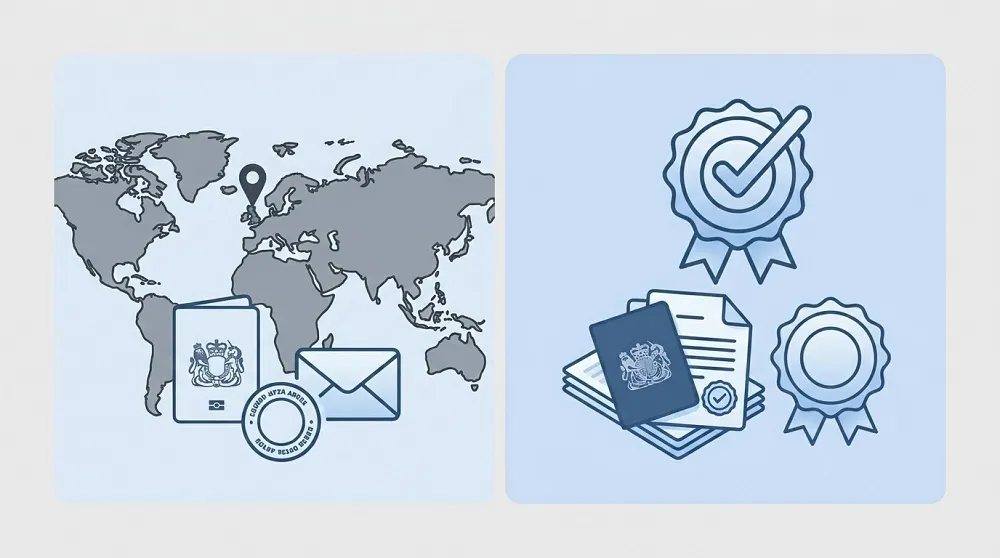
Apostille and consular legalisation. Documents issued outside the UK, such as a foreign certificate of incorporation, often need an apostille to confirm their authenticity under the Hague Apostille Convention. If the company’s home country is not part of that convention, consular legalisation may be required instead.
Certified translation. Any document not originally in English usually needs a certified translation from a professional or sworn translator, and banks may ask to see both the original and translated version during their checks.
Working with a Bank’s Inward Investment Team
If you are applying for a full UK business bank account as an overseas company, official UK government guidance recommends contacting your chosen bank’s central inward investment team rather than a local branch, online portal, or call centre. These teams are usually based in London and specialise in exactly this kind of application. Tell them upfront that your business has foreign shareholders or directors, since this changes which department handles your case.
UK Resident vs. Non-Resident Requirements at a Glance
| Requirement | UK Resident | Non-UK Resident |
|---|---|---|
| Standard ID and address proof | Yes | Yes |
| UK registered business address | Usually already in place | Often required to obtain first |
| Apostille/legalisation of documents | Not applicable | Frequently required |
| Certified translations | Not applicable | Required for non-English documents |
| Processing route | Standard online or branch application | Inward investment team recommended |
| Typical timeline | 1 to 4 weeks | 4 weeks to 3 months |
Quick summary: Non-residents can open UK business accounts, but expect extra document legalisation, longer timelines, and a more specialised application route through dedicated teams at larger banks.
How Long Does It Take to Open a Business Bank Account?
Timelines vary enormously depending on the type of bank and the complexity of your business.
Digital and Fintech Bank Timelines
Digital-first providers, such as Tide, Starling, and Monzo, often approve straightforward applications within hours to three business days. Their entire process runs through an app, with identity verification handled by uploading documents and recording a short video.
High Street Bank Timelines
Traditional banks generally take longer, often one to four weeks, partly because some require an in-branch appointment and partly because their internal checks are more manual. HSBC notes that once an application is submitted, the bank works to identify the applicant online first, only requesting additional documents if that step fails.
Overseas Applicant Timelines
As mentioned above, opening a full UK business account from abroad can take four weeks to three months. This accounts for the time needed to arrange meetings, gather legalised documents, and complete the more thorough checks required for international applicants.
Factors That Speed Up or Delay Approval
A sole trader or single-director company with clean, matching documents will almost always move faster than a multi-partner business with several PSCs to verify. Mismatched names between your ID and your address proof, expired documents, or an incomplete application are the most common causes of unnecessary delay.
Step-by-Step: How to Apply for a Business Bank Account
Step 1: Choose the right account type. Decide whether you need a start-up account, a standard business current account, or a higher-turnover commercial account. This shapes which bank and which documents you will need.
Step 2: Gather your documents. Pull together ID, proof of address, and your business registration documents before you start. Having digital scans ready in advance, with clearly named files, saves real time.
Step 3: Submit your application. Most banks now offer online or app-based applications that take ten to fifteen minutes to complete. Branch and phone applications are still available with traditional banks if you prefer a face-to-face process.
Step 4: Verification and credit checks. The bank verifies your identity, runs AML and sanctions screening, and may carry out a credit check on you personally or on your business, depending on your trading history.
Step 5: Approval and setup. Once approved, you receive your account number and sort code, followed by your debit card. Set up any direct debits, move your business transactions over, and start using the account exclusively for business activity.
Common Reasons Business Bank Account Applications Get Rejected
Rejection is more common than people expect, and it rarely means you are banned from ever having a business account.
Incomplete or Expired Documentation
This is the single most common cause. An expired passport, a utility bill older than three months, or a name that does not exactly match across documents will commonly trigger a pause or outright decline.
High-Risk Industry Classification
Businesses in sectors like gambling, defence, or cryptocurrency are turned down by some providers purely because of their industry, regardless of how well-prepared the application is.
Poor Personal or Business Credit History
New businesses without a credit history of their own may be assessed on the applicant’s personal credit file instead. A poor personal credit score can lead to rejection, particularly for accounts that include overdraft or credit facilities by default.
Non-Resident Directors Without a UK Address
As discussed earlier, a lack of UK residential ties among directors is a frequent sticking point, especially with banks that do not have a dedicated international division.
What to Do After a Rejection
Resubmitting with corrected or updated documents resolves many rejections, since the issue is often a simple mismatch rather than a fundamental ineligibility. If a high-risk industry classification is the problem, it is worth looking specifically at challenger banks that explicitly support your sector. If poor credit is the issue, some providers offer accounts without overdraft or credit facilities, which can be easier to qualify for since the bank takes on less risk.
Special Cases and Edge Scenarios
Opening a Business Bank Account for a Dormant Company
If your limited company is registered but not yet trading, you generally do not need to rush into opening a business bank account. In fact, some advisers suggest waiting, since opening and actively using an account could be read by HMRC as evidence the company has started trading, which changes your filing obligations. Once you are ready to begin trading, opening the account at that point keeps your dormant company status clean until then.
Before or After Companies House Registration
You cannot open a limited company bank account before the company itself is registered with Companies House, since the bank needs your certificate of incorporation and company number. Some banks, including providers like Uswitch-listed accounts, ask that you allow up to 72 hours after Companies House registration before applying, simply to give their systems time to verify your details against the public register.
Business Bank Accounts With Bad or No Credit History
It is entirely possible to open a business account with poor credit. Look specifically for accounts that do not offer overdraft or credit card facilities, since these tend to have less stringent credit requirements. Many digital banks, including Tide, do not run a credit check at all for their basic account tiers.
Opening Multiple Business Bank Accounts
There is nothing stopping you from holding more than one business bank account, whether to separate different revenue streams, hold savings, or access features from two different providers. Each account requires its own separate application, and managing multiple accounts does add a layer of administrative complexity worth weighing against the benefit.
FSCS Protection and Business Bank Account Safety
How FSCS Protection Works for Business Accounts
The Financial Services Compensation Scheme protects eligible deposits if a UK-authorised bank fails. For most business accounts held with a fully authorised bank, this protection covers up to £85,000 per business.
Fully Licensed Banks vs. E-Money Institutions
This distinction matters more than most people realise. Banks such as Starling and HSBC hold full UK banking licences regulated by both the Financial Conduct Authority and the Prudential Regulation Authority. Some popular providers, including Tide, operate as e-money institutions in partnership with a licensed bank behind the scenes (in Tide’s case, ClearBank), and coverage still applies through that underlying banking partner. Always check who actually holds the deposits and confirm FSCS protection directly with your provider before relying on it.
Sole Trader Aggregation vs. Per-Entity Company Protection
Here is a detail almost no other guide explains clearly. If you are a sole trader, your personal and business accounts at the same bank are aggregated together under the £85,000 FSCS limit, since you and your business are legally the same person. If you run a limited company, your company’s deposits are protected separately from your personal £85,000 limit, since the company is its own legal entity. This means incorporating can genuinely increase your total protected coverage across personal and business funds combined.
Switching Business Bank Accounts
Using the Current Account Switch Service
The Current Account Switch Service, known as CASS, lets you move your business current account from one bank to another for free, with most major UK banks participating. The switch typically completes within seven working days.
What Transfers Automatically vs. What You Must Update Yourself
CASS automatically moves your direct debits, standing orders, and incoming payment redirects. It does not automatically update every supplier or client who has your old account details on file for manual bank transfers, so it is worth notifying your key contacts directly during the switch window.
When Switching Makes Sense
Switching is worth considering if your current bank’s fees have increased, if you have outgrown a start-up account’s free period, or if you need features your current provider does not offer, such as multi-currency accounts for international trade.
Choosing the Right Type of Business Bank Account
High Street Banks vs. Digital and Challenger Banks
High street banks tend to offer stronger support for cash-heavy businesses, in-branch service, and established overdraft and lending products. Digital banks generally win on speed of setup, lower fees, and tighter integration with accounting software, though most do not offer overdrafts at all.
Start-up Accounts vs. Standard Business Accounts
Start-up accounts are built for businesses trading less than a year, often with free banking periods and simpler eligibility criteria. Standard business accounts suit established businesses, sometimes with turnover caps that determine which tier you qualify for.
Key Features to Compare
Look closely at monthly fees, transaction charges, whether overdrafts are available, accounting software integration, and international payment costs if you trade overseas. A free account with high per-transaction charges can end up costing more than a paid account with generous free transactions, depending on how your business actually uses its account.
Frequently Asked Questions
Do I need a business bank account if I’m a sole trader?
No, it is not a legal requirement. You can use a personal account if your bank allows business activity on it. However, a separate business account makes bookkeeping, tax reporting, and presenting a professional image to clients much simpler.
What documents do I need to open a business bank account in the UK?
At minimum, you need proof of identity, proof of address, and evidence of your business structure, such as a certificate of incorporation for a limited company or proof of self-employment registration for a sole trader. Many banks also ask for your UTR and, if applicable, your VAT registration number.
Can I open a UK business bank account as a foreigner?
Yes, though it usually involves more documentation, including apostilled or legalised company paperwork and certified translations for non-English documents. Larger banks with dedicated inward investment teams tend to handle these applications more smoothly than smaller providers.
How long does it take to open a business bank account?
Digital banks can approve straightforward applications within hours to three days. High street banks usually take one to four weeks. Overseas applicants should expect four weeks to three months.
Can I open a business bank account with bad credit?
Yes, many providers will still open an account for you, particularly if you choose one without overdraft or credit facilities, since these carry less credit risk for the bank.
Do I need a UTR to open a business bank account?
Not always, but many banks request it as part of understanding your tax status. Sole traders and limited company directors receive a UTR automatically when they register with HMRC.
Can my accountant open a business bank account on my behalf?
No. Only directors, nominated partners, or the sole trader themselves can open the account. Accountants, bookkeepers, and other appointed representatives are not permitted to do this, even with full authorisation to manage your finances day to day.
What happens if my application is rejected?
You can usually reapply once you have corrected the issue, whether that means updating an expired document, matching your name and address exactly across paperwork, or choosing a provider that better suits your industry or credit profile.
Key Takeaways: Business Bank Account Requirements Checklist
Opening a business bank account in the UK comes down to a few clear rules. Limited companies and LLPs must have one by law. Sole traders and general partnerships do not have to, but most benefit from one anyway. Whichever structure you have, prepare your ID, proof of address, and business registration documents in advance, make sure every name and address matches exactly across them, and choose a provider whose eligibility criteria and industry restrictions genuinely fit your business.
If you are a non-resident or running an overseas company, budget extra time for document legalisation and consider going through a bank’s inward investment team rather than a standard branch application. And if you are ever rejected, treat it as a fixable hiccup rather than a dead end. In almost every case, a corrected document or a better-matched provider gets you across the line on the second try.